Have you ever just looked around your home and felt tired at the mere thought of all your stuff And maybe your calendar is so crowded with things to do that the mere act of scheduling time to relax feels like another appointment on an endless hamster wheel. You’re not alone. Millions of people are overwhelmed by the complexities of modern life, yet they hesitate to make changes for fear that their personal sacrifices won’t pay off.
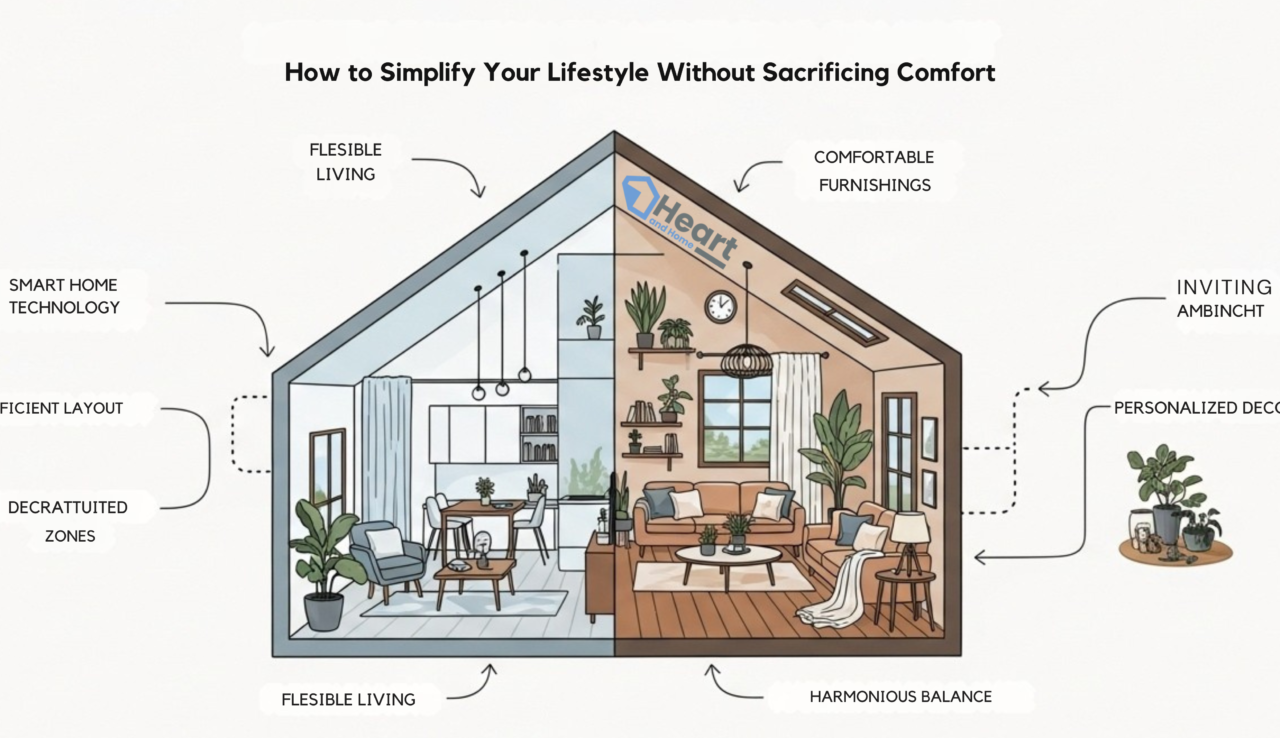
And here’s the good news: Streamlining your living lifestyle doesn’t have to mean sleeping on the floor and eating cold beans from a can. It’s really about making deliberate decisions that can help cut out the extra noise in your life, keeping and often strengthening the things that matter most to you. When you get it right, a more straightforward life can feel more luxurious than an overcomplicated one ever did.
Why Simplification Enhance Rather Than Diminishes Comfort
Now, before we get into the how, lets talk about the elephant in the room. To many, simplicity means deprivation. They imagine empty rooms, tasteless food and a life without pleasure. But nothing could be further from the truth.
Think about the last time you slept in a well-designed hotel room. It probably had a fraction of the things in your bedroom back at home, and it probably felt far more comfortable and relaxing. That’s not a coincidence. When you clear away the clutter and chaos, it gives a shimmering chance for real comfort to find its way through. Your focus isn’t spread thin over the dozens of objects vying for your attention. Instead you can go ahead and really enjoy what is in your hands.
Literature also underlines this link between simplicity and well-being. Research has linked the accumulation of possessions with lowered wellbeing, and comparisons with others to depression and anxiety. Having less fosters more gratitude for what you do have, which then perpetuates a positive cycle and actually increases life satisfaction.
The Real Cost of Complexity in Daily Life
Everything that you own has a need of something from you. It must be cleaned, sorted, maintained stored or insured or eventually disposed of. Everything you put on your calendar takes up time and energy. Any subscription you keep up with is of both mental accounting and another dollar.
When you sum up all these little demands they add to a lot. Decluttering your home allows you to spend half the amount of time on housework. That’s a few hours of your week that could be wasted doing something you actually enjoy, instead of dealing with things that you hardly remember buying.
Complexity also impacts your mental health in nearly imperceptible but profound ways. Visual clutter vies for your attention and makes it more difficult to concentrate and relax. A packed schedule doesn’t have room for spontaneity or rest. The financial complexity generates ongoing background stress that stays with you all of the time.
| Aspect: | Complex Living: | Simplified Living: |
|---|---|---|
| Daily Decisions | Constant decision fatigue from too many choices (what to wear, which gadget to use, what to do) | Fewer decisions thanks to curated options and established routines |
| Time Management | Hours spent cleaning, organizing, and maintaining possessions | More free time due to fewer items requiring attention |
| Financial Stress | Multiple subscriptions, impulse purchases, and storage costs drain resources | Lower expenses and clearer budget priorities |
| Mental Clarity | Visual clutter and packed schedules create constant low-level anxiety | Calm environment supports focus and relaxation |
| Relationship Quality | Less time and energy available for meaningful connections | More availability for family, friends, and community |
| Environmental Impact | Higher consumption leads to more waste and larger carbon footprint | Reduced consumption supports sustainability |
Start With Your Physical Space
Your environment shapes your mental state more than you might realize. A cluttered space creates a cluttered mind. The good news is that this relationship works both ways clearing your physical space can create immediate mental relief.
Begin With One Small Area:
The most common mistake people make when simplifying is trying to do everything all at once. This tactic usually becomes overwhelming and people quit on the whole project. Feel free to pick one small corner to begin with instead. That could be one drawer, a shelf or even just your nightstand.
Immerse yourself in this one thing but be totally immersed. Take each item in your hands and ask yourself if it serves a purpose or whether it truly sparks joy. Be honest. You know that yoga DVD you bought five years ago and never used? It is of no use to you it’s just there as a memory of an unused purpose.
After you’ve cleared slightly more than a square foot of space, let it motivate you. Feel what it’s like to have one uncluttered space. Let that feeling inspire you to slowly grow into other spots.
Apply the “One In, One Out” Rule:
After you’ve made the first few sweeps, however, it requires some new habits to keep things simple. And one of the best is that “one in, one out” rule. There is only so much room in your home, after all, and every time something new comes in, something old needs to go out. This sets up a natural balance and won’t let build up come back in.
This rule also promotes more intentional shopping. When you realize that acquiring a new shirt means saying goodbye to an old one, you think twice about whether you really want or need that new item.
Create a Capsule Wardrobe:
In our homes, few spaces harbor as much unused stuff as closets do. Most everybody wears only about twenty percent of their clothes. The rest simply wastes space and makes your life more complicated than it needs to be when you get dressed.
A capsule wardrobe should have on average thirty to forty interchangeable pieces. And you might think that sounds constraining, but most people say it is freeing. You’ll spend less time choosing outfits, pare down your closet even further (and soon realize you don’t actually miss any of it) and love wearing everything you own instead of sifting through the dozens of “maybes”.
Begin by getting rid of anything that is too small, uncomfortable or that you haven’t worn in the last year. Now, look at what’s left and figure out your primary style. Look for pieces that are interchangeable, so you can get more outfits out of less.
Address Paper Clutter Systematically:
The innocuous paper clutter can mount in the blink of an eye. Pick one single spot for incoming papers a tray, drawer, or box. Take care of paperwork often with this container, sorting papers into the three categories that need action items to file and material to recycle or shred.
Develop a simple filing system for the important documents you need to hold on to. It doesn’t have to be fancy even one folder for each category will do. The idea is to have everything a designated home of its own, so that papers don’t migrate all over your counters and tables.
Consider digital alternatives where possible. Many bills and statements can be a clutter-reducing, environment-saving addition to your household.
Streamline Your Daily Routines
Complexity in our routines steals time and mental energy every single day. By simplifying your daily habits, you create bandwidth for what actually matters.
Meal Planning Saves More Than Time:
Knowing what to make for dinner is taxing, for one, and you often wind up opting for more expensive and less healthy on-the-go options. Spending an hour, what you make yourself planning dinner takes an hour, but the difference is it frees up your time everyday.
Your meal plan doesn’t need to be fancy. Many of us eat identical meals for breakfast and lunch over days in the workweek, then develop five more-creative dinners. It may not read very sexy, but it’s liberating. That way you can use your creativity to focus on things that make you happy instead of constantly coming up with what’s for dinner.
Batch cooking takes this further. Cooking bigger batches of grains, proteins or vegetables on the weekend means that during the week you are more assembling and reheating than preparing from scratch each time.
Establish Morning and Evening Routines:
Unstructured time in the morning and evening often gets wasted on low-value activities like scrolling social media or making repeated small decisions. Creating simple routines for these bookends of your day increases their value.
Your morning routine might include a few minutes of stretching or movement, a simple breakfast, and preparing for the day ahead. The evening routine could involve tidying your space briefly, preparing tomorrow’s essentials, and winding down without screens.
These routines don’t need to be rigid schedules. Think of them as default patterns that guide your time when you haven’t made other plans.
Limit Decision-Making Wherever Possible:
Decision fatigue is real. Even making choices later in the day, causes those following decisions to decrease in quality. It’s not about making dumb decisions but shedding unnecessary ones.
It could entail eating the same meals several days in a row, adopting a personal uniform or small wardrobe, or setting specific times for routine tasks. There may be some opportunity to automate, whether that means automating bill payments, setting up a regular grocery delivery or writing standard-issue messages that you can use as templates.
When you conserve your decision-making power for what really matters, those big choices get the consideration they deserve.
Simplify Your Financial Life
Money complexity causes enormous stress. Multiple accounts, various subscriptions, unclear spending patterns, and complicated investment strategies all demand mental energy and create anxiety.
Create a Simple Budget Framework:
You don’t need complex spreadsheets or fancy apps to manage money well. A basic framework works for most people. Consider the 50-30-20 approach: roughly fifty percent of income goes to needs like housing and groceries, thirty percent to wants like entertainment and dining out, and twenty percent to savings and debt repayment.
This isn’t a rigid prescription but a starting point. The exact percentages matter less than having a clear understanding of where your money goes and ensuring you’re saving something consistently.
Audit Your Subscriptions:
Subscription services have exploded in recent years, and it’s easy to lose track of what you’re paying for. Take time to review every recurring charge on your accounts. You’ll likely find services you’ve forgotten about or no longer use.
Ask yourself honestly: do you use each subscription enough to justify its cost? Would you actively choose to buy it again if you didn’t already have it? Cancel anything that doesn’t pass these tests.
Consolidate Where It Makes Sense:
Multiple bank accounts, credit cards, and investment accounts create complexity that requires ongoing management. Where possible, consolidate to simplify. You might not need five credit cards perhaps two or three serve your needs perfectly well.
This doesn’t mean putting all your eggs in one basket. You still want appropriate diversification in investments and perhaps a backup credit card for emergencies. But thoughtful consolidation reduces the mental overhead of managing your financial life.
Create Mental Space and Reduce Stress
Simplifying your physical environment and routines creates external order, but internal simplicity requires direct attention to your mental habits.
Practice Digital Minimalism:
Our gadgets are all vying for our attention with notifications, alerts, and the endless scroll of social media. This digital noise adds to our background stress and splinters our attention.
Begin by turning off nonessential notifications. Do you, however, need to know the second that someone likes your photo? Probably not. If you do this and actually have something that someone needs to know right away, it’s reserved for special cases only.
Try scheduling times to read emails and browse social media instead of continually watching throughout the day. By batching these activities you spend less of your total time on them, and you also minimize the freedom these superficial tasks have to interrupt more meaningful work.
Even a brief digital detox or two can help restore perspective. Even a few hours’ or a day’s reprieve from screens can help remind you how much of your attention the devices usually take up.
Spend Time in Nature:
Study after study has demonstrated that spending time outdoors can lower stress, improve mental well-being and help alleviate anxiety and depression. And at about two hours of natural environment exposure per week, health benefits were observed. This doesn’t mean taking wilderness trips a walk in the park is enough.
Nature shows scenes that grab your eyes instead of jabbing them like our screens. This helps your mind to rest and reset in ways the indoors rarely let it.
Protect Your Time and Energy:
Learning to say no is essential for a simplified life. Every commitment you accept is a commitment you’re making to yourself a promise of your limited time and energy.
Before agreeing to new obligations, consider whether they align with your priorities. It’s okay to decline invitations, delegate tasks, or admit that you already have enough on your plate. Protecting your boundaries isn’t selfish; it’s necessary for sustainable living.
This extends to relationships as well. Some connections energize you while others drain you. Without being cruel, you can choose to invest more heavily in relationships that add value to your life while spending less energy on those that don’t.
Make Simplification Sustainable
The initial enthusiasm for simplifying often fades when life gets busy. Building sustainable practices ensures your efforts don’t unravel over time.
Start Small and Build Gradually:
Big changes rarely stick. Instead of overhauling your entire life, focus on one area at a time. Master one new habit before adding another. Give changes time to become automatic before piling on more.
This approach might feel slow, but it’s far more effective than dramatic transformations that collapse within weeks. Think of simplification as a direction rather than a destination you’re always moving toward more intentional living.
Focus on Progress, Not Perfection:
Your home will never stay perfectly organized. Your schedule will occasionally get overstuffed. You’ll buy things you don’t need and forget to cancel subscriptions on time.
This is normal. Simplification isn’t about achieving some ideal state and maintaining it forever. It’s about general movement toward less complexity and more intentionality. When you notice you’ve drifted, simply redirect without harsh self-criticism.
Connect With Your Reasons:
Simplification requires ongoing motivation, and that motivation comes from understanding your deeper reasons. Why do you want a simpler life? More time with family? Less financial stress? Better health? Greater creativity?
Keep these reasons visible. When tempted to accumulate more stuff, accept another commitment, or complicate your systems, remembering your underlying motivations helps you stay aligned with your values.
FAQs
Q: Won’t simplifying my lifestyle mean giving up things I enjoy?
A: Not at all. The goal is removing what doesn’t add value so you have more time, money, and energy for what does. Most people find they enjoy their remaining possessions and activities more deeply when they’re not competing with dozens of alternatives for attention.
Q: How do I simplify when my family members aren’t on board?
A: Start with your own spaces and belongings. Don’t force minimalism on others instead, let them see the benefits through your example. Focus on shared spaces by reducing clutter that belongs to no one specifically. Over time, family members often become curious about the peace you’ve created for yourself.
Q: How long does it take to simplify your lifestyle?
A: Simplification is ongoing rather than a one-time project. Initial decluttering might take weeks or months depending on your starting point. Building new habits takes longer research suggests new behaviors need at least two months to become automatic. Accept that this is a gradual process rather than a quick fix.
Q: What if I regret getting rid of something?
A: This rarely happens, but when it does, the item is usually replaceable. Keep a “maybe” box for items you’re uncertain about if you haven’t retrieved anything from it after six months, donate the contents without looking inside again. The peace of mind from decluttering far outweighs the occasional minor regret.
Q: Can I simplify if I have children?
A: Absolutely. In fact, children benefit significantly from less overwhelm. Rotate toys rather than having everything accessible at once. Involve kids in decisions about what to keep and donate. Create simple routines that give structure without rigidity. Children often adapt to simplified living more easily than adults do.
Q: How do I deal with gifts from people who don’t understand my lifestyle?
A: Appreciate the thoughtfulness behind gifts while being honest about your values. Let close family and friends know you prefer experiences, consumables, or contributions to causes you care about. For unwanted items you receive, express gratitude for the gesture and then quietly donate them. The relationship matters more than the object.
Q: What’s the difference between minimalism and simple living?
A: These terms overlap significantly. Minimalism often emphasizes owning fewer physical possessions, while simple living encompasses broader lifestyle changes including time management, relationship choices, and daily routines. Both approaches share the goal of removing excess to make room for what matters most.
Moving Forward With Intention
Simplifying your lifestyle is one of the most valuable investments you can make. The returns come in forms more precious than money time to spend as you choose, mental clarity to pursue your goals, and freedom from the constant maintenance that complex living demands.
You don’t need to transform your life overnight. Start with one drawer, one routine, one subscription audit. Notice how it feels to have a little more space and a little less to manage. Let that feeling guide you toward the next small step.
The most luxurious life isn’t the one with the most stuff it’s the one with the most meaning. By clearing away what doesn’t serve you, you create room for genuine comfort, authentic connection, and the things that actually make you happy.
Your simpler life is waiting. The only question is which small step you’ll take first.