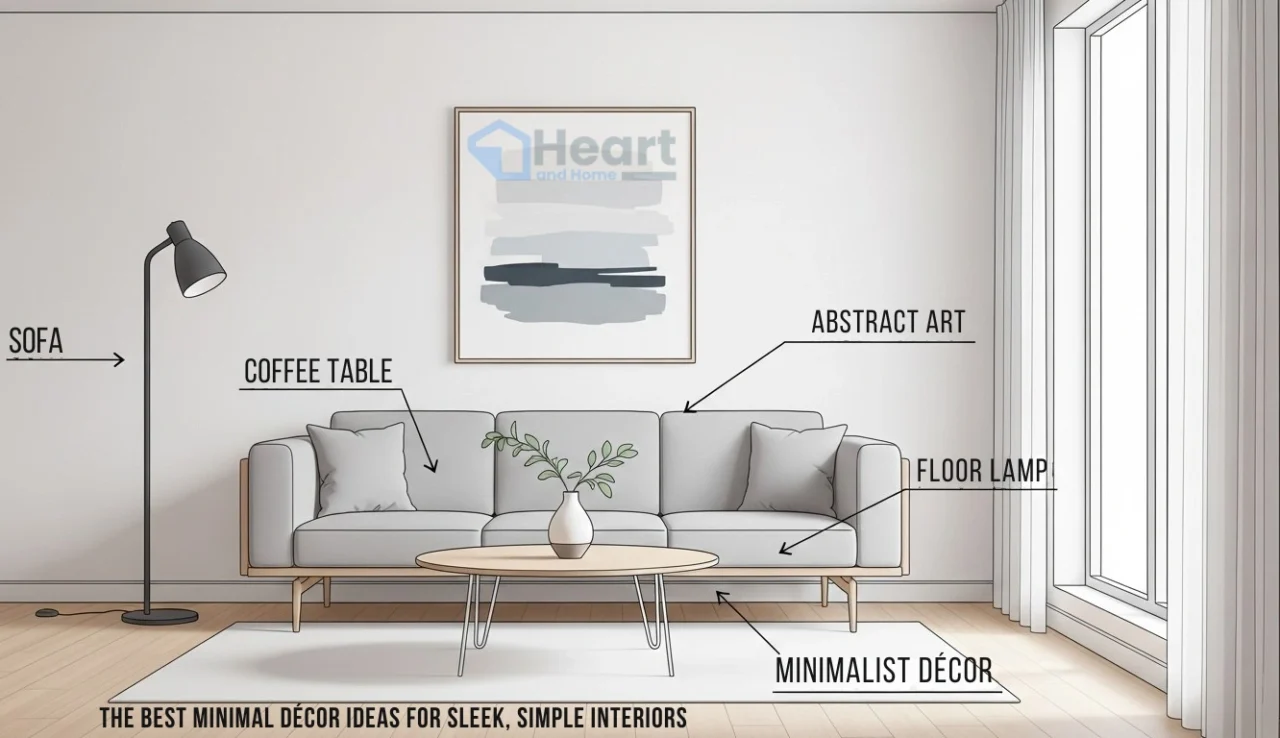
Minimal décor isn’t about living in an empty white box or throwing away everything you love. It’s about creating a space that feels calm, intentional, and easy to live in. When done right, minimal design gives your home breathing room, makes cleaning easier, and somehow makes your coffee taste better (okay, that might be psychological but still).
The Best Minimal Décor Ideas for Sleek, Simple Interiors, you’ll learn practical, real-world ways to simplify your space without making it cold or boring. This article goes deeper than typical décor roundups by explaining why each idea works, how to apply it in small and large home décor, and how to avoid the most common minimalist mistakes.
| Area: | Minimal Principle: | Practical Action: | Common Mistake to Avoid: |
|---|---|---|---|
| Color | Limit palette | Use 2–4 core colors | All-white with no warmth |
| Furniture | Function first | Choose multi-use pieces | Tiny furniture everywhere |
| Surfaces | Visual calm | Keep 60–70% clear | Removing everything |
| Textures | Quiet contrast | Mix wood, fabric, stone | Flat, sterile finishes |
| Lighting | Soft layers | Use warm light sources | One harsh ceiling light |
| Storage | Hidden order | Closed cabinets & baskets | Open clutter shelves |
| Decor | Intentional | Fewer, meaningful items | Random “filler” objects |
Start With Purpose, Not Emptiness
When things are designed with intent, everything has to justify its presence. One bold chair counts more than five average ones. One well-placed lamp is worth three little personality lamps. Purpose makes emptiness Emptiness only creates echo.
Define the mood before you buy or remove anything: calm, warm, modern, cozy, focused or airy. It will all be downhill from there for you, as your decisions become a lot less difficult.
Use a Tight Color Palette That Still Feels Warm
So-called starter decor blogs offer instructions to “use white everywhere.” That’s incomplete advice. These minimal decor ideas are both minimal and warm with tight-knit color palettes.
Select two neutrals as a base and one accent. Think warm white, soft beige and natural wood. Or light gray, charcoal and olive. This is how we keep rooms clean while not feeling like you’re in the waiting room of a hospital.
Warmth is derived from undertones and materials, not from the amount of color. There’s a barrier against sterile vibes in even the simplest rooms: wood and linen, clay textures.
Choose Fewer Pieces But Make Them Better
Minimal style doesn’t mean cheap furniture. It means fewer but stronger pieces. Many competitor posts list dozens of small décor tricks but skip this core rule.
A single well-built sofa with clean lines beats multiple small seats. A solid dining table with space around it feels more luxurious than a crowded room of smaller items.
When choosing furniture, look for:
- Clean shapes
- Visible structure
- Comfort first
- Durable materials
- Neutral upholstery
If it looks good empty, it will look great styled.
Create Visual Breathing Room Between Objects
Here’s a minimalist winner that the competition rarely bothers to explain well it’s not just about the number of items, but also spacinting.
You can use the same furniture just make it stand apart.
Leave open wall areas. Keep gaps between décor objects. Allow floor space to show. This gives visual breathing room, as designers say. Your brain reads that as quiet and orderly.
When every surface and corner has something “decorative” then it no longer feels minimal even if everything is small.
Layer Texture So the Room Doesn’t Feel Flat
A common mistake in minimal interiors is removing too much variation. The result looks like a furniture showroom neat but lifeless.
Texture solves that.
Use layered materials like:
- Natural wood grain
- Woven fabric
- Matte ceramics
- Stone surfaces
- Soft wool throws
- Linen curtains
Texture gives depth without adding clutter. It keeps sleek interiors from feeling cold.
Competitor articles often focus only on color and shape. Texture is the missing third pillar.
Hide Storage Don’t Eliminate It
Closed cabinets, under-bed drawers, storage ottomans, and built-ins keep everyday items accessible but invisible.
Clutter doesn’t disappear when you remove shelves it just migrates like confused birds.
Design storage first. Style second.
Let Lighting Do More of the Decorating
Lighting is underused in many competitor guides. They mention lamps but don’t explain how powerful lighting is in minimal design.
Use layered lighting:
- Soft floor lamps
- Warm table lamps
- Indirect wall lighting
- Dimmer switches
Good lighting reduces the need for extra décor. A well-lit corner feels finished even without objects.
Avoid bright overhead-only lighting. That kills minimal mood faster than anything else.
Use Statement Pieces Instead of Many Small Ones
Instead of many small decorations, use one strong focal point.
- Large art.
- One sculptural chair.
- Oversized plant.
- Bold pendant light.
A statement piece anchors the living room and removes the need for filler décor. This strategy appears in high-end interiors but is rarely emphasized in standard décor blog lists.
Add Life With Controlled Greenery
Plants work beautifully in minimal spaces when used with restraint.
Choose structured plants like:
- Snake plant.
- Olive tree.
- Fiddle leaf fig.
- Rubber plant.
Use simple pots in neutral tones. One large plant beats five small ones every time.
Plants add organic shape that balances straight lines and flat surfaces.
Keep Surfaces Partially Not Fully Empty
Competitor posts often say “clear all surfaces.” That’s unrealistic and not helpful for daily living.
A better rule: keep 60–70% of surfaces clear.
Leave room on tables and counters, but allow a few meaningful objects a book, a candle, a ceramic bowl. The space feels lived-in, not staged.
Minimalism should support life, not fight it.
Room-by-Room Minimal Strategy
Living rooms benefit from layout simplicity first. Reduce furniture count before changing décor.
Bedrooms feel more minimal when bedding stays neutral and layered instead of patterned and busy.
Kitchens look sleek when counters stay mostly clear and small appliances stay stored.
Bathrooms become minimal through matching containers and concealed storage.
Workspaces improve when only daily-use tools stay visible.
How This Guide Improves on Typical Competitor Content
Most competitor articles about minimal décor:
Give short tip lists without explanation.
Focus only on removing items.
Repeat color palette advice.
Ignore lighting science.
Skip spacing strategy.
Don’t explain texture balance.
Offer no practical percentages or rules.
This guide goes further by:
Explaining psychological effects of space and spacing.
Giving measurable guidelines like surface-clear ratios.
Covering lighting layers in detail.
Adding storage strategy instead of removal.
Teaching texture layering.
Providing room-by-room application.
Focusing on livable minimalism, not showroom minimalism.