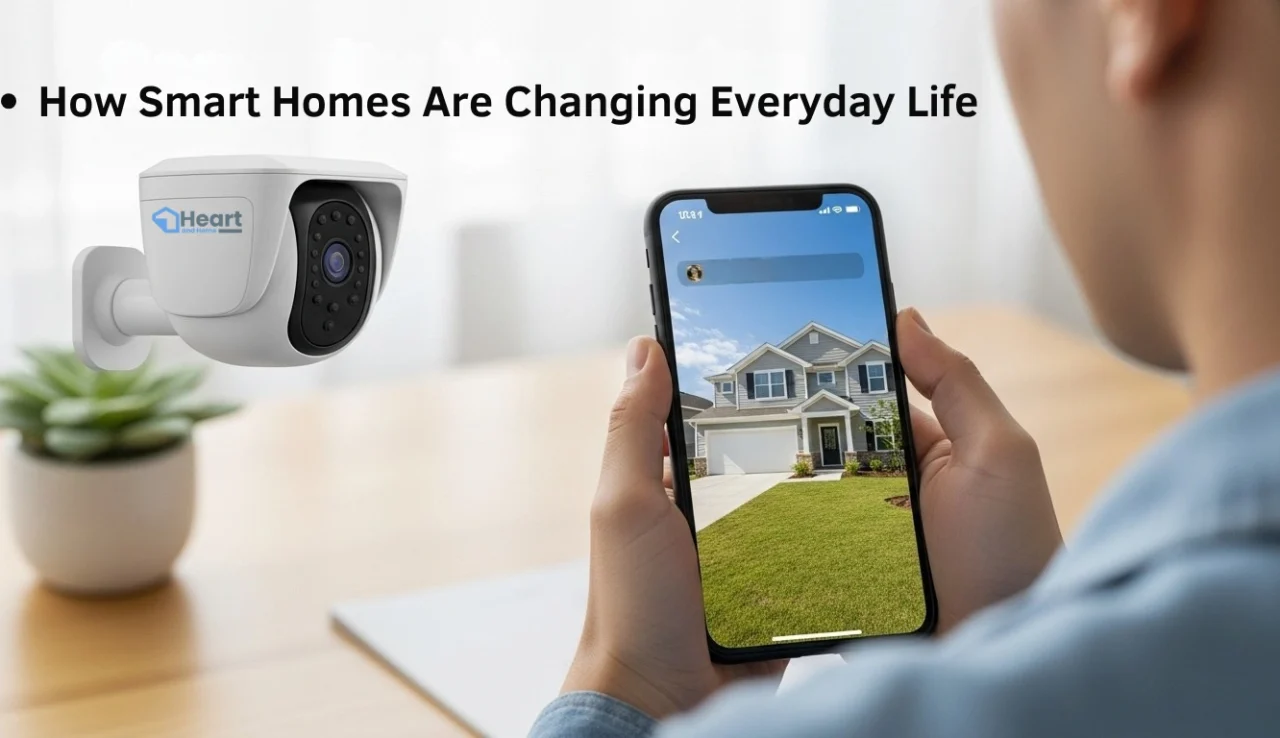
You walk through your front door after a long day. The lights gently brighten. The thermostat already hit your perfect temperature. Your favorite music plays softly in the background. Nobody pressed a button. Your home just knew what you needed.
This isn’t science fiction anymore. Millions of homes around the world already run on smart technology. What once felt like a geeky luxury now sits at the center of how regular families manage their daily lives.
| Area of Life | How Smart Homes Help | Key Devices |
|---|---|---|
| Energy & Bills | Automated savings of 8–20% on heating and cooling | Smart thermostats, smart plugs, LED systems |
| Home Security | Real-time alerts, facial recognition, remote monitoring | Smart cameras, video doorbells, smart locks |
| Daily Convenience | Voice-controlled routines, automated schedules | Voice assistants, robot vacuums, smart displays |
| Health & Wellness | Air quality monitoring, sleep optimization, medication reminders | Air sensors, circadian lights, smart dispensers |
| Remote Work | Optimized lighting, distraction-free environment, automated chores | Smart bulbs, smart plugs, noise machines |
| Smart Kitchen | Recipe suggestions, automated cooking, food waste reduction | Smart fridges, smart ovens, automated coffee makers |
| Aging in Place | Fall detection, activity monitoring, emergency alerts | Wearables, smart sensors, medical alert devices |
| Entertainment | Seamless streaming, whole-home audio, personalized content | Smart TVs, smart speakers, streaming hubs |
| Property Value | Increased resale value by up to 5% | Integrated smart home systems |
What Exactly Is a Smart Home?
A smart home uses internet-connected devices to control and automate things like lighting, temperature, security, and appliances. These gadgets talk to each other and to you through your phone, a voice assistant, or on their own using artificial intelligence.
Here’s the simplest way to think about it. A regular home does what you tell it. A smart home figures out what you need before you even ask.
The global smart home market hit roughly $127 billion in 2024, and analysts expect it to cross $633 billion by 2032. In the U.S. alone, about 45% of connected households already own at least one smart device and that number keeps climbing, especially among millennials and young families.
According to the Association for Smarter Homes & Buildings, smart home adoption in the U.S. and Canada jumped from 49% in 2024 to 59% in 2025. That kind of leap tells you this isn’t a slow trickle. It’s a wave.
How Smart Homes Save You Real Money on Energy Bills
Most of us first got curious about smart home tech because someone told us it could lower our electricity bills. And honestly, they were right.
Smart thermostats like Google Nest and Ecobee learn your habits over time when you leave for work, when you go to bed, when the house sits empty and they adjust on their own. Research shows they cut heating costs by at least 8% and cooling by 10% or more. Most homeowners save between $50 and $200 a year, depending on their climate and how they use energy.
But the savings go far beyond thermostats. Here’s where the money really adds up:
- Smart plugs track standby power drain from devices you aren’t using and shut them off on their own
- Smart lighting with occupancy sensing and dimming can slash lighting energy costs by 35–70%
- Solar panels paired with home batteries help families in sunny areas save $1,000–$1,500 a year
- Smart energy dashboards, now in about 19% of households, let you see real-time electricity use and change wasteful habits fast
- Demand response programs let some thermostats adjust slightly during peak hours in exchange for bill credits from your utility company
When you can literally watch how much it costs to leave the lights on all night, you stop doing it pretty quickly.
Security That Never Sleeps Protecting Your Home
If one area of smart homes has truly changed the game, it’s security.
Modern AI cameras can tell the difference between your cat on the porch and a stranger trying the door handle. Older motion sensors used to trigger alerts for every leaf and shadow. Today’s systems have cut false alarms by up to 90%. They learn your household’s patterns and only ping you when something genuinely unusual happens.
The most popular smart security devices right now include:
- Video doorbells — about 33% of homes have one, letting you see and talk to visitors from anywhere on the planet
- Smart locks — roughly 22% of households use them for keyless entry and remote access
- AI surveillance cameras — with facial recognition and behavioral analysis that detect threats in real time
- Biometric authentication — fingerprint and facial recognition locks keep getting smarter, and voice recognition plus heartbeat scanning aren’t far behind
The real magic kicks in when all these devices work together. Your camera spots movement in the backyard. Within seconds, outdoor lights flip on. Every door locks. Recording starts. You get an alert on your phone. All of that happens without you lifting a finger.
About 43% of smart home users say safety matters more to them than any other benefit beating out convenience, comfort, and even energy savings. And here’s a bonus most people miss: smart security systems can knock up to 20% off your home insurance bill.
Morning Routines, Simplified (Yes, Even With Kids)
Here’s where smart homes shift from “nice to have” to “I can’t go back.”
Picture this. At 6:30 a.m., your smart blinds open slowly. The coffee maker kicks in. The thermostat bumps up a couple of degrees so the bathroom isn’t freezing. A voice assistant reads out the weather and your calendar while you brush your teeth.
For families with kids, smart routines feel like a lifesaver. Automated reminders play through speakers “Time to put your shoes on!” Smart kitchen displays show hands-free recipes while you pack lunches. Robot vacuums, now in about 25% of homes, clean the floors while everyone’s out.
Around 68% of smart home interactions now happen through voice commands. People just talk to their homes. It sounds futuristic, but for millions of families, it’s just another Tuesday.
Some of the most popular daily automations people build today:
- “Out-the-Door” routine — your phone’s GPS senses you’ve left, so doors lock, security arms itself, the thermostat drops, and the vacuum runs
- “Good Night” routine — lights dim, doors lock, the thermostat lowers, and cameras activate with a single voice command
- “Welcome Home” routine — lights turn on, temperature adjusts, and music starts the moment you walk through the door
Smart Kitchen: Where Technology Meets Your Dinner Table
Most smart home articles barely mention the kitchen. That’s a huge miss, because this room touches your life more than almost any other.
Smart refrigerators now come with internal cameras, so you can check what’s inside while standing in the grocery store. Some use AI to suggest recipes based on ingredients you already have. That means less food waste and fewer of those “we have nothing to eat” moments even when the fridge sits packed.
Smart ovens let you preheat from your phone while you’re still driving home. Built-in cameras check on food without opening the door and losing heat. AI cooking tools adjust temperature and timing on their own, so even beginner cooks get better results.
Other kitchen innovations that make a real difference day to day:
- Automated coffee makers that brew your cup right when your alarm goes off
- Motion-activated under-cabinet lights that turn on the moment you walk into the kitchen at night
- Smart dishwashers that sense how dirty the load is and adjust water pressure to save water and energy
- Pantry weight sensors that track staple items and add them to your shopping list when they run low
- Voice-guided cooking through smart speakers that walk you through recipes step by step
Smart Homes and Remote Work, Your Home Office
Here’s a topic almost every competitor skips, and it affects millions of people daily.
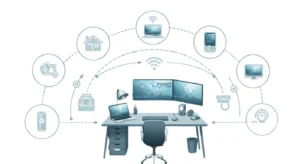
Remote and hybrid work became the norm for a huge chunk of the workforce. The line between home and office blurred. Smart home tech now steps in to help manage that overlap.
Lighting makes the first big difference. Research from industrial environments shows that optimized lighting can boost productivity by up to 9%. Smart bulbs shift from bright, cool-toned light in the morning to warmer tones later in the day cutting eye strain without you having to think about it.
Temperature plays a bigger role than most people realize. When you feel too hot or cold, your focus drops fast. A smart thermostat can keep your office zone at a different temperature than the rest of the house during working hours cooler for deep focus, warmer when you clock off.
Smart home tools that help remote workers stay on track:
- Scheduled appliance automations — your washing machine, dryer, and slow cooker run on timers so you never leave your desk mid-task
- Smart plugs — control coffee makers, fans, and space heaters without getting up
- Voice assistant productivity tricks — set work timers, add to-do items by voice, and play focus music hands-free
- Smart noise machines — block household sounds during calls and deep-focus sessions
If you work from home and haven’t explored these tools yet, this might be the single biggest quality-of-life upgrade smart home tech can give you.
Smart Homes and Your Health
One of the most exciting ways smart homes change everyday life shows up in health and wellness and most people don’t see it coming.
Advanced air quality sensors track carbon dioxide, humidity, volatile organic compounds, and fine particles in real time. When levels spike maybe someone’s cooking or pollen counts shoot up outside the system kicks in automatically. It activates purifiers or adjusts your HVAC on its own. For families dealing with allergies or asthma, this makes a real, noticeable difference.
Circadian lighting has caught on fast too. About 12% of smart homes now run lighting that mimics natural daylight. It shines brighter and bluer in the morning to boost energy, then shifts warmer and dimmer at night to help your body wind down. Wellness experts say these systems regulate sleep cycles and support serotonin production. People who use them report sleeping better and feeling more balanced.
Health-focused smart home features growing fast right now:
- Smart pill dispensers — adoption climbed 28% in two years, helping people stay on top of medications
- Connected blood pressure cuffs and scales — about 17% of users link them to telemedicine apps for easy remote check-ins
- Air quality monitoring systems — tracking PM2.5, CO2, and VOCs, with automatic purifier activation when levels rise
- Circadian lighting — in 12% of smart homes, supporting better sleep and improved mood
- AI reminders for hydration and medication — active in about 6% of households
The smart health tech segment inside the home market reached $4.3 billion in 2025. This isn’t a passing trend it’s a whole new chapter in what our homes can do for us.
Helping Older Adults Live Independently and Safely
This topic rarely gets the attention it deserves, but it might carry the most meaning of anything in the smart home world.
For millions of seniors, the choice between staying home and moving into assisted living feels deeply personal. Smart technology now makes it more realistic than ever to age in place safely, comfortably, and with dignity.
Activity sensors track daily routines without feeling intrusive. If someone who usually gets up at 7 a.m. hasn’t moved by 10, a family member gets an alert. Smart water sensors catch leaks or unusual usage. Fall detection wearables call for help automatically the moment someone goes down.
Key smart home features for elderly care:
- Voice assistants — ideal for seniors who struggle with small screens. They just say, “Call my daughter” or “What time’s my appointment?”
- Remote monitoring — family members check temperature, locked doors, and stove status without hovering
- Wearable biometrics — nearly 39% of people with assisted living experience call these essential. They track heart rate, sleep, and movement in real time
- Smart pill dispensers — automated reminders that prevent missed doses
- Emergency alert systems — linked to smart speakers and wearables so help comes instantly
Caregivers benefit enormously from this setup. You get peace of mind while your loved one keeps their independence. That balance means everything.
Final Thoughts
Smart homes aren’t perfect privacy questions linger, devices still frustrate sometimes, and the upfront cost can sting. But adoption jumped from 49% to 59% in just one year, prices keep dropping, and standards like Matter finally make everything work together. Pick one problem. Grab one device. Let your home start pulling its weight. You’ll wonder why you didn’t do it sooner.