Living in a small space does not mean you have to give up on style or comfort. With the right design choices, even the tiniest room can feel open, bright and surprisingly spacious.
I have helped dozens of people turn their cramped apartments and compact homes into spaces they actually love. And the secret is always the same. It is never about having more square footage. It is about working smarter with what you already have.
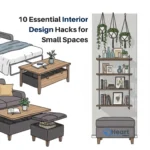
I am sharing 10 essential interior design hacks for small spaces along with 2 bonus steps that most design blogs completely overlook. I studied the top competitors on this topic, found the gaps in their advice and packed everything into one complete guide. So let us get started.
Invest in Multi-Functional Furniture That Works Overtime
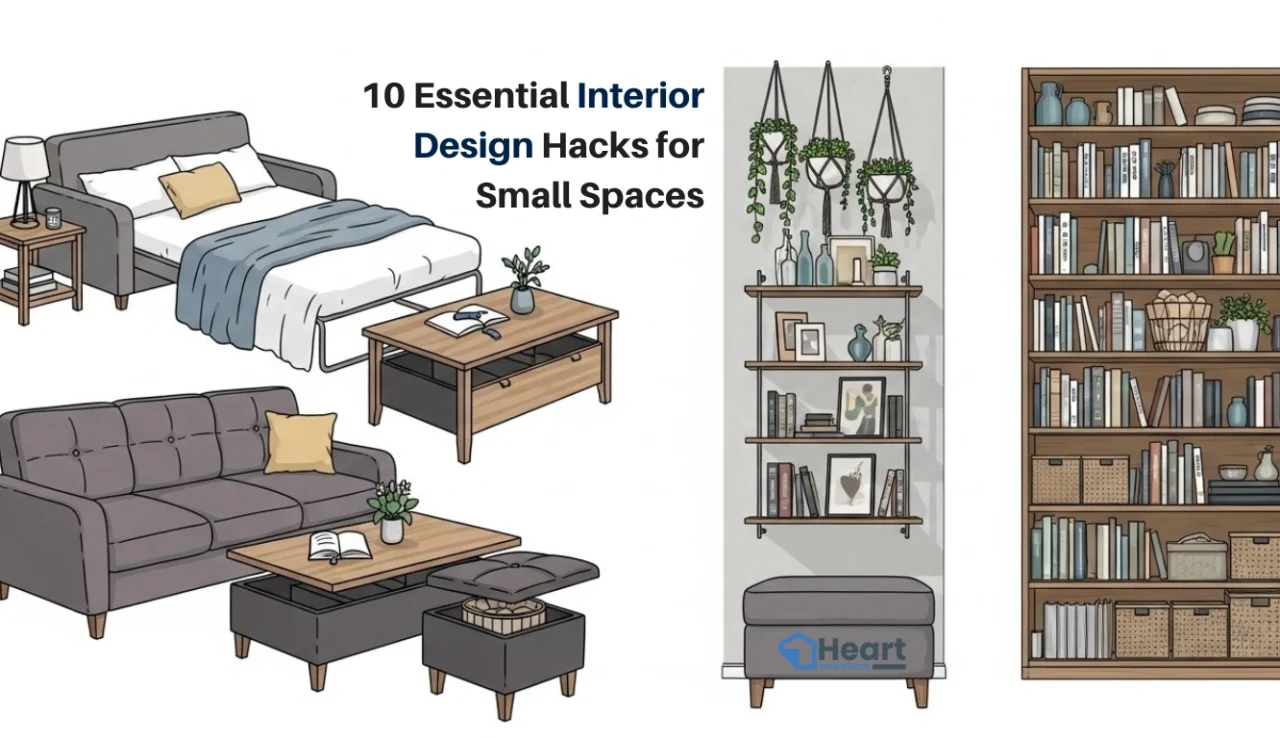
Every piece of furniture in a small home should pull double duty at minimum. A coffee table that only holds your mug is wasting precious real estate.
Here are some of the best multi-functional pieces worth considering.
- Storage ottomans that work as seating and blanket storage at the same time
- Sofa beds with modern designs that do not look like something from a college dorm
- Drop-leaf dining tables that fold flat against the wall when you are not eating
- Murphy beds that tuck into the wall during the day and free up your entire room
- Nesting coffee tables you can pull apart for guests and stack together when you need floor space
Take a look at every piece of furniture you own and ask yourself one question. Does this do more than one thing? If the answer is no then it might be time to swap it out.
Go Vertical With Your Storage
When floor space is limited the only direction left is up. Most people completely underuse their vertical wall space and fixing that is one of the easiest wins you can get.
Smart vertical storage ideas you can try right away.
- Floating shelves to keep items off countertops and floors
- Tall narrow bookcases that reach close to the ceiling
- Over-the-door organizers for bathrooms, bedrooms and closets
- Pegboards in kitchens and home offices for flexible wall storage you can rearrange anytime
- A simple shelf mounted above a doorframe to hold books or baskets in a spot most people ignore
Here is a pro tip. Install your highest shelves about 12 inches below the ceiling and use them for items you rarely need. This draws the eye upward and naturally makes a room feel taller than it really is.
Use Mirrors Strategically to Double Your Visual Space
A well-placed mirror can make a room feel twice its actual size. But where you put it matters more than how big it is.
Here is how to get mirrors right in a small space.
- Place a large mirror across from a window to bounce natural light and create the feel of two windows
- Lean an oversized floor mirror against a wall for drama and depth without any installation work
- Use mirrored furniture like nightstands or console tables for subtle light amplification
- Group smaller mirrors together in a gallery arrangement that works as both decor and a light booster
One important rule to remember. Never place a mirror across from a cluttered area because you will just double the visual chaos. Make sure it reflects something pleasant like a window, a piece of art or a tidy shelf.
Stick to Light Colors But Add One Bold Accent
Light colors make rooms feel bigger. Whites, soft grays, pale blues and warm creams reflect more light and make walls seem to push back rather than close in.
But going all white makes a room feel boring and flat. The real trick is using a light palette as your foundation and then adding one or two bold accent colors that give the space personality.
Try the 60-30-10 rule for balancing your colors.
- 60 percent goes to your dominant light color for walls and large furniture
- 30 percent goes to a secondary color for curtains, rugs and smaller furniture
- 10 percent goes to a bold accent like throw pillows, artwork or a single statement wall
A deep emerald accent wall in a mostly white room creates a focal point that makes the space feel more intentional and designed rather than smaller.
Choose Furniture That Fits Your Scale
I see this mistake all the time. People buy a massive sectional sofa because it is comfortable and then they wonder why their living room feels so cramped. In a small space oversized furniture will swallow your room whole.
Keep these rules in mind when furniture shopping.
- Measure your room before you go shopping and know your dimensions by heart
- Look for apartment-sized furniture because many brands now make compact versions of popular pieces
- Choose furniture with exposed legs so you can see the floor underneath which creates an open feeling
- Pick round tables over rectangular ones because they take up less visual space and have no sharp corners blocking walkways
- Leave at least 30 inches of clearance for major walkways so the room does not feel tight
When you can see the floor beneath a couch or chair the room immediately feels more open. Pieces that sit flat on the ground look heavy and block your sight lines.
Master the Art of Hidden Storage
Clutter is the number one enemy of small spaces. The solution is not necessarily owning less. It is hiding your storage so cleverly that nobody knows it is there.
Here are the best hidden storage strategies that actually work.
- Bed frames with built-in drawers that can replace an entire dresser
- Hollow entryway benches that hide shoes and bags out of sight
- Kitchen cabinet organizers like pull-out racks, lazy Susans and door-mounted holders
- Decorative baskets and matching boxes on open shelves to hide random clutter in plain sight
- Under-staircase storage such as pull-out drawers, a reading nook or a compact home office
If you have stairs in your home then that area underneath is prime real estate. Most people waste it completely but it can hold an incredible amount of storage or even become a functional little workspace.
Layer Your Lighting for Warmth and Dimension
A single overhead light makes any small room feel flat and cold. If you want a space that feels cozy and inviting you need layered lighting.
There are three layers you should aim for.
- Ambient lighting for general room illumination like ceiling fixtures or recessed lights
- Task lighting for focused areas like reading lamps, under-cabinet kitchen lights or desk lamps
- Accent lighting for mood like LED strip lights behind your TV, small table lamps or candles
Wall-mounted sconces work especially well in small spaces because they free up table and floor space while putting light exactly where you need it.
Here is a budget-friendly tip. Even swapping harsh overhead bulbs for warm-toned LED bulbs around 2700K can instantly make a room feel more inviting without spending much at all.
Use Transparent and Reflective Furniture
Transparent furniture takes up physical space without taking up visual space. Your eye moves right through it which keeps the room feeling open and uncluttered.
The best transparent and reflective pieces for small rooms include these.
- Glass coffee tables or dining tables that do not block your sight lines
- Acrylic side chairs that give you seating without adding visual bulk
- Lucite shelving that stores items without feeling heavy in the room
- Metallic side tables or chrome fixtures that bounce light around nicely
- Clear storage containers in closets and pantries so you can see everything at a glance
One or two transparent or reflective pieces per room is the sweet spot. If you add too many the space starts feeling like a furniture showroom instead of a home.
Hang Curtains High and Wide to Fake Taller Ceilings
This trick costs almost nothing but makes a huge difference. Most people hang curtains right at the window frame and that is a missed opportunity.
Here is what you should do instead.
- Mount your curtain rod 6 to 12 inches above the window frame and get it as close to the ceiling as you can
- Extend the rod a few inches beyond each side of the window
- Choose lightweight floor-length curtains in a light color
- Use sheer fabrics that let light filter through while still softening the look of the window
This creates the illusion that your window is much larger than it actually is. Your ceiling looks taller because the eye follows the fabric all the way up. And when the curtains extend past the frame more glass shows when they are open which lets in more natural light.
Stay away from heavy drapes or dark curtains in small rooms. They absorb light and make walls feel like they are closing in on you.
Create Distinct Zones Without Building Walls
If you live in a studio or open-plan space the biggest challenge is making one room serve multiple purposes without it feeling chaotic and messy.
Here are zone creation techniques that actually work.
- Use a rug under your dining area to visually separate it from the living space
- Place a bookshelf perpendicular to a wall so it acts as a room divider that still lets light pass through
- Change the lighting in each zone with bright task lights for work areas and warm ambient light for relaxation corners
- Shift the color palette by painting one wall a different shade or using distinct textiles in each zone
- Use a console table or the back of your sofa as a natural border between different areas
Without zones an open-plan room just feels like one big undefined space. This simple technique is the missing piece that makes open layouts actually work and feel organized.
Replace Traditional Doors With Sliding or Pocket Doors
This is a game-changer that almost no design blog covers properly.
A standard swinging door eats up roughly 8 to 10 square feet of floor space. That is space you cannot put furniture in or walk through while the door is open. In a small room that kind of waste adds up fast.
Here are better alternatives to try.
- Sliding barn doors that mount on a track and slide along the wall instead of swinging into the room
- Pocket doors that slide right into the wall itself and completely disappear when open
- Curtains or sliding panels on closets instead of clunky bifold doors that need clearance space
This hack works especially well in small bathrooms, tight hallways and cramped bedrooms. Swapping a standard bathroom door for a pocket door can free up enough room for an extra storage shelf or even a larger vanity.
Extend Your Living Space Outdoors
None of the top three competitor blogs mention this and it is honestly one of the most impactful changes you can make. If you have any outdoor space at all then you are sitting on extra square footage that most people completely ignore.
Here are ways to extend your space outside.
- Turn a small balcony into a dining spot with a weatherproof bistro set
- Transform a tiny patio into a lounging area with outdoor cushions and string lights
- Use a narrow outdoor strip as a herb garden or quiet reading nook
- Add window boxes with trailing plants to blur the line between indoors and outdoors
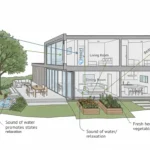
The key is continuity. Use similar color palettes and materials both inside and outside so the spaces feel connected to each other. When your eye can travel from the living room through the glass to a well-arranged outdoor area the whole home feels bigger even though you did not change a thing inside.
If you live in an apartment then foldable or stackable outdoor furniture is your best friend. Set it up when you want to use the space and tuck it away when you need the balcony clear.
FAQs
What is the single best interior design hack for small spaces?
Multi-functional furniture gives you the biggest impact. When every piece serves two or three purposes you need less furniture overall. That frees up floor space and makes the room feel open right away.
How can I make a small room look bigger without spending much money?
Decluttering is free and makes an immediate difference. Hanging curtains higher, repositioning mirrors to reflect windows and swapping dark throw pillows for lighter ones can transform a room for under 50 dollars.
Are dark colors always bad for small rooms?
Not at all. A single dark accent wall can actually add depth and character. Keep most surfaces light and use darker tones sparingly for contrast. Deep navy, forest green or charcoal gray all work well as accent colors in an otherwise light room.
How do I choose the right size furniture for a small space?
Measure your room before you shop and leave 30 inches of clearance for walkways. Look for apartment-sized pieces, choose furniture with exposed legs and always measure your doorways too. A lot of people buy furniture that cannot even fit through their front door.
Can plants work in small spaces?
Yes they can if you are strategic about it. Hanging planters, wall-mounted holders, snake plants and vertical garden systems all add greenery without eating into your floor space. Windowsills and high shelves are perfect spots for smaller pots.
Do sliding doors really make a difference?
They make a bigger difference than most people expect. A swinging door wastes 8 to 10 square feet of usable space. A sliding or pocket door eliminates that completely. In tight bedrooms and bathrooms that recovered space can fit an extra shelf or small piece of furniture.
What is the most common mistake in small space design?
Buying furniture that is too big for the room is the most common one. The second mistake is relying on a single overhead light instead of layered lighting. And the third is ignoring vertical space because most people treat their walls like they stop at eye level when there is usually four to six feet of unused space above.
How do I make an open-plan small space feel organized?
Use rugs, bookshelves, lighting changes and color shifts to create distinct zones for different activities. Without zone creation an open-plan room just feels like one big area with no real purpose to any part of it.
Final Thoughts
A well-designed small home can feel more welcoming and put together than a large one that has no real plan behind it. These 10 essential interior design hacks for small spaces along with the 2 bonus tips give you everything you need to make your tiny space work harder, look better and feel bigger. Pick one or two changes to start with this weekend and you will be surprised how quickly it all adds up.