Your garden is more than just a backyard. It’s your personal retreat, your dining room under the stars, and the one place where fresh air meets creative freedom. Whether you have acres of land or a tiny balcony, the right approach can turn any outdoor space into something truly special.
That’s what DecoratorAdvice is all about real, practical garden tips that work for real people. No fluff, no jargon, just advice you can actually use this weekend.
Why Your Outdoor Space Deserves More Attention
Most of us spend weeks picking the perfect sofa but give our gardens barely fifteen minutes of thought. That’s a huge miss.
A well-planned outdoor space can boost your property value by up to 15 percent. But beyond money, gardens improve your mental health, lower stress, and make everyday life more enjoyable.
DecoratorAdvice believes your garden should feel intentional. Not expensive, just thoughtful. Ask yourself one simple question — how do I actually want to use this space? Once you answer that, every other decision falls into place.
Know Your Garden Unique Personality
Before you spend a single dollar at the nursery, take time to understand your garden’s natural conditions. Every space has its own microclimate, soil type, and sunlight pattern.
Here’s what to check first:
- Sunlight: Track which areas get full sun (6+ hours), partial shade, or full shade throughout the day.
- Soil type: Use a simple pH test kit from any garden center. Clay soil drains poorly, sandy soil drains too fast, and loamy soil hits the ideal middle ground.
- Drainage: Notice where water pools after rain. That tells you a lot about what will grow well and where.
When you understand these basics, you save money and avoid heartbreak. There’s nothing worse than watching a beautiful new plant wilt because you put it in the wrong spot.
Choose Plants That Actually Thrive
One of the biggest rookie mistakes? Falling in love with a plant at the store without checking if it suits your climate zone. DecoratorAdvice always recommends starting with native or well-adapted species. They need less water, fewer chemicals, and they look healthier because they belong where you live.
Here’s a quick reference table to match plants with garden conditions:
| Garden Condition | Recommended Plants | Maintenance | Best Planting Season |
|---|---|---|---|
| Full Sun (6+ hours) | Lavender, Salvia, Black-Eyed Susan, Rosemary | Low to Medium | Spring |
| Partial Shade (3–6 hours) | Hostas, Astilbe, Coral Bells, Ferns | Medium | Spring or Early Fall |
| Full Shade (Under 3 hours) | Impatiens, Begonias, Lily of the Valley | Medium | Spring |
| Dry or Sandy Soil | Sedum, Yarrow, Agave, Ornamental Grasses | Low | Spring or Fall |
| Wet or Clay Soil | Iris, Daylily, Joe-Pye Weed, Cardinal Flower | Medium | Spring |
| Container or Balcony | Petunias, Herbs (Basil, Mint), Dwarf Citrus | Medium to High | After Last Frost |
The Art of Layering: How to Create Depth
Flat gardens look dull. That’s not opinion it’s a design principle. Professional landscapers use something they call “layering” to add depth, and you can do it yourself without any help.
The idea is simple:
- Back row: Place your tallest plants and structures here.
- Middle row: Fill with medium-height perennials and shrubs.
- Front row: Use low-growing ground covers and edging plants.
This setup pulls the eye through the entire space naturally. And don’t forget vertical elements — climbing plants on trellises, hanging baskets, and wall planters all add height without eating up ground space.
Garden designer Pollyanna Wilkinson suggests you create winding routes through your space with hedges and tall planting. When everything isn’t visible at once, even a small garden feels bigger and more fun to explore.
Lighting: The Secret Weapon Most People Ignore
Your garden should look just as inviting at 9 PM as it does at noon. Good outdoor lighting can turn an ordinary space into something special, and it doesn’t have to cost much.
Here are the key strategies:
- Solar path lights: They’re affordable, need zero wiring, and work perfectly along walkways.
- String lights: Drape them across a pergola or between fence posts for instant atmosphere.
- Uplighting: Put lights at the base of trees or statement plants to cast dramatic shadows.
- Warm LED tones around 2700K: These give your evenings a cozy, welcoming feel.
The biggest mistake? Putting lights at eye level where they cause glare. Keep everything low and subtle. Let the garden be the star. The lighting just plays a supporting role.
Hardscaping: The Backbone of Great Garden Design
Plants get the glory, but hardscaping paths, patios, walls, and edging gives your garden structure. Without it, even gorgeous plantings end up looking messy.
A few things to keep in mind:
- Curved paths feel relaxed and organic. Straight paths feel formal and clean.
- Natural stone looks timeless but it costs more. Pea gravel runs just $0.50 to $1.50 per square foot and looks great with metal or wood edging.
- Concrete pavers offer a solid middle ground with dozens of style options.
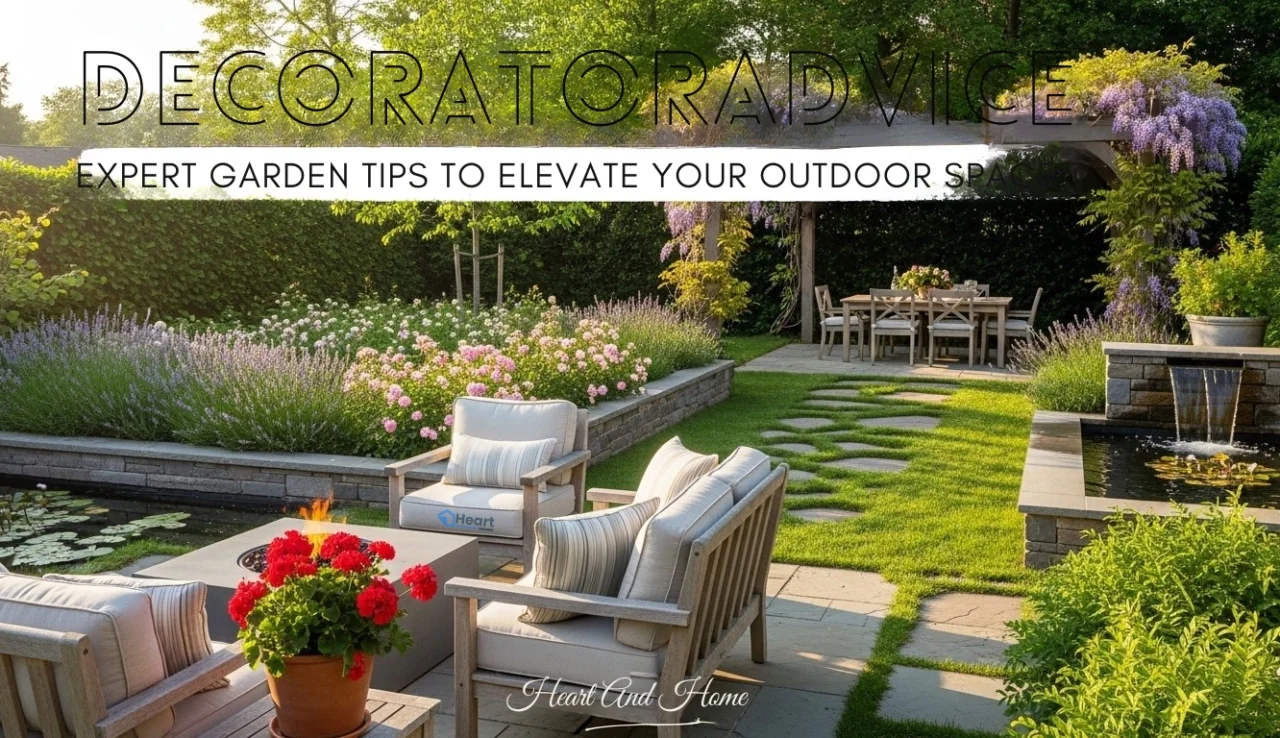
Raised beds are another DecoratorAdvice favorite. They fix drainage issues, cut down on back strain, keep weeds under control, and add clean visual lines. You can build them from wood, stone, corrugated metal, or recycled materials whatever fits your style.
Create Outdoor Comfort Zones: Furniture, Fire Pits, and Water Features
Many garden guides talk about plants and paths but forget one crucial thing people need somewhere to sit and enjoy the space. Your garden should have at least one comfortable spot that feels like an outdoor room.
Furniture tips:
- Go with weather-resistant materials like teak, powder-coated metal, or synthetic wicker.
- Use water-repellent cushion covers for color and comfort.
- For small spaces, foldable or stackable chairs keep things flexible.
- A hammock or swing chair gives you instant relaxation appeal.
Fire pits change the whole game. They extend your garden’s use into cooler evenings, give friends a natural place to gather, and add a warm glow no string light can match. You can build a simple stone block fire pit in an afternoon just stack at least 12 inches high and drop a steel fire ring inside for extra durability.
Water features bring a whole new sensory layer. Even a small bubbling fountain hides street noise, calms the mood, and pulls birds into your yard. You don’t need a full pond. A self-contained tabletop fountain does the job beautifully on a patio.
Build a Wildlife-Friendly and Pollinator Garden
Most garden design articles skip this completely, and that’s a real shame. When you create a pollinator-friendly garden, your outdoor space becomes more productive, more colorful, and more alive.
Here’s why it matters: about three-quarters of all flowering plants depend on pollinators, and roughly one in three bites of food you eat exists because of them.
How to get going:
- Plant flowers that bloom at different times, from spring through fall, so pollinators always find food.
- Include key species like milkweed for monarchs, lavender, coneflower, and bee balm.
- Skip chemical pesticides. Try companion planting or bring in ladybugs instead.
- Leave some wild areas in your garden. Brush piles, leaf litter, and bare sandy patches give ground-nesting bees a home décor.
- Put out a shallow dish with pebbles and rainwater as a simple pollinator drinking station.
DecoratorAdvice considers this the most overlooked step in garden design. A buzzing, butterfly-filled garden isn’t just good for the planet — it’s endlessly fun to watch.
Composting and Soil Health: The Foundation Nobody Talks About
You can buy the prettiest plants in the world, but if your soil is dead and worn out, nothing will last. Composting is the single most impactful thing you can do for your garden’s long-term health, and it costs almost nothing.
Here’s what composting does for your garden:
- Adds nitrogen, phosphorus, and potassium naturally.
- Helps sandy soil hold water better.
- Loosens up heavy clay soil so roots can breathe.
- Feeds the tiny organisms that keep your garden ecosystem running.
Starting a compost pile is easy. Set up a bin in a shady corner of your yard. Layer green materials like vegetable scraps, coffee grounds, and fresh grass clippings with brown materials like dry leaves, cardboard, and small sticks. Keep it damp, turn it every two weeks, and in two to four months you’ll have free, rich soil amendment ready to use.
DecoratorAdvice recommends you spread a one-inch layer of compost over your beds every fall. This builds soil quality year after year, cuts down on fertilizer costs, and helps plants fight off pests and disease on their own.
DIY Garden Decor: Personal Touches on a Budget
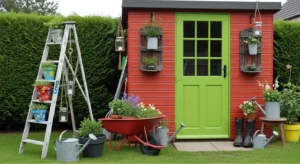
The best gardens have personality. That doesn’t come from a catalog it comes from the creative touches you add yourself.
Here are some easy DIY ideas to try:
- Turn an old wooden ladder into a vertical plant stand.
- Fill mason jars with tea lights and hang them as rustic outdoor lanterns.
- Use vintage watering cans, wheelbarrows, or worn-out boots as quirky planters.
- Hand-paint flower pots in bold colors for instant energy.
- Freshen up your garden shed with a new coat of paint. A bright-colored door turns a boring storage box into an actual design feature.
DecoratorAdvice encourages you to think of these projects as part of the gardening experience itself. The goal isn’t perfection. It’s about making a space that feels welcoming, personal, and a little bit fun.
Seasonal Planning: Keep Your Garden Beautiful Year-Round
A garden that only shines in June needs better planning. You want something interesting happening in every season.
Here’s a simple framework to follow:
- Spring: Tulips, daffodils, and crocuses. Plant the bulbs the previous fall.
- Summer: This is peak season for most perennials and annuals.
- Fall: Ornamental grasses, Japanese maples, and late-blooming asters steal the show.
- Winter: Evergreen shrubs, birch or dogwood bark, and garden art or obelisks keep the structure alive.
For year-round comfort outdoors, think about adding a heater to your patio. Freestanding propane heaters or wall-mounted electric models turn your seating area into a cozy hangout even when the temperature drops.
Grab a notebook and start a simple garden journal. Write down what blooms each month. After one full year, you’ll see exactly where the gaps are and know how to fill them.
Water-Smart Gardening: Beautiful Doesn’t Mean Thirsty
With water costs going up and droughts hitting more regions, smart watering makes sense both for the planet and your wallet.
Key water-saving strategies:
- Drip irrigation sends water straight to the roots and cuts waste by up to 50 percent compared to sprinklers.
- Mulching with organic material holds moisture, fights weeds, and feeds the soil as it breaks down.
- Rain barrels catch roof runoff and give you free water for the garden.
- Rain gardens are planted depressions that collect rainwater naturally. They filter pollutants and support local wildlife.
- Hydrozoning means grouping plants by water needs. Don’t put a thirsty hydrangea next to drought-tolerant lavender and water them the same way. It never works.
Small Space Solutions: Big Ideas for Tiny Gardens
You don’t need a huge yard to create something beautiful. Some of the world’s most jaw-dropping gardens are tiny. The trick? Make every square foot count.
Smart strategies for small spaces:
- Hang mirrors on walls to create the illusion of more depth. Yes, this actually works outdoors.
- Pick multi-functional furniture like benches with built-in storage to keep things tidy.
- Use tiered planters and vertical gardens so you grow upward, not outward.
- Go with light-colored walls and paving to make the space feel open.
- Train climbing plants on fences to blur boundary lines and make the garden feel like it stretches further.
- Add one bold focal point a vibrant pot or a small fountain to draw the eye and distract from the compact size.
Final Thoughts
Your garden doesn’t need to be perfect it just needs to be yours. Start small, try new things often, and don’t worry about getting everything right on day one. The best outdoor spaces aren’t the ones you see in magazines. They’re the ones where people actually hang out laughing around a fire pit, reading in a shady corner, or sipping morning coffee while the sun hits the flowers just right. That’s the space worth building, and with these DecoratorAdvice tips, you’re already on your way.