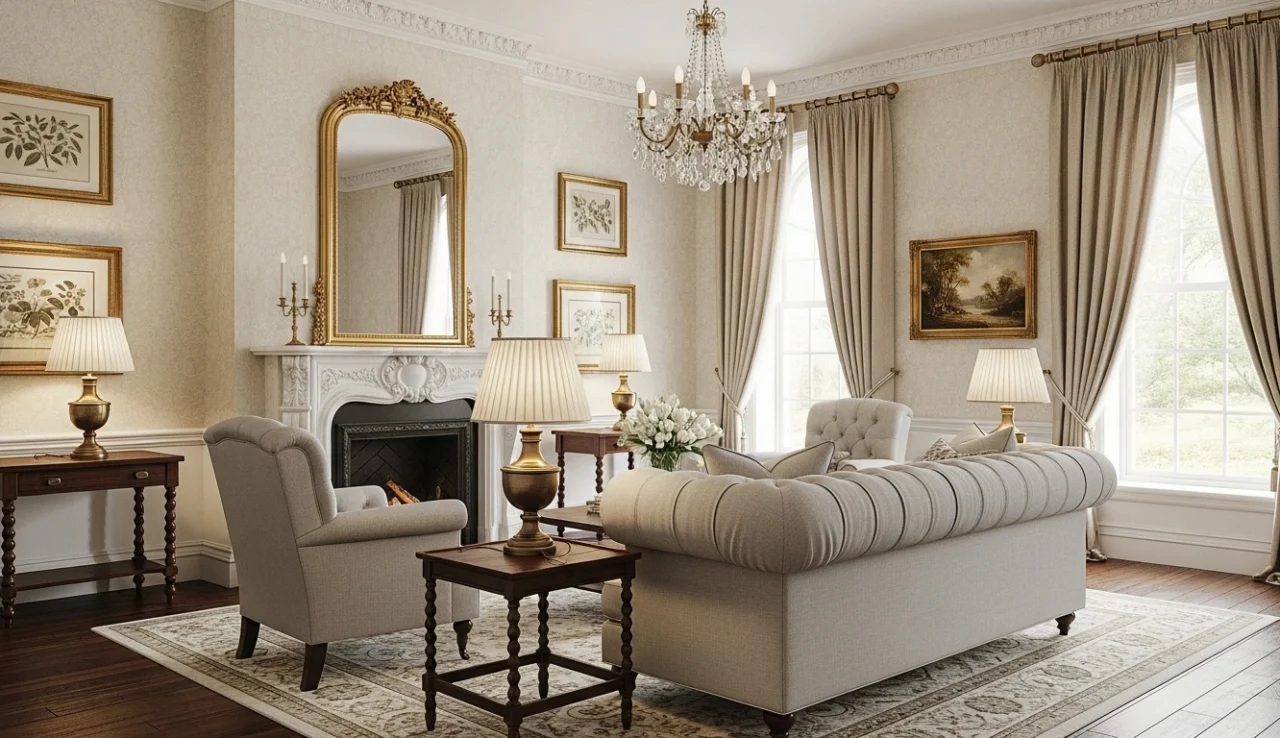
There is something about a Victorian living room that just feels right. The rich details, the layered textures, the feeling that every piece has a story to tell. But here is what most people get wrong. Victorian does not have to mean dark, heavy, or stuffy.
Some of the most stunning Victorian living rooms today use neutral tones to create spaces that feel elegant, airy, and surprisingly modern. If you dream of designing an elegant Victorian living room with neutral tones, you are in the right place.
This guide walks you through everything from color palettes and furniture choices to architectural details, wallpaper ideas, and seasonal styling tricks. Whether you work with a period property or start from scratch, you will find practical ideas you can use right away.
| Design Element | Victorian Tradition | Neutral-Tone Approach |
|---|---|---|
| Wall Color | Deep burgundy, forest green, navy | Warm taupe, soft cream, greige, pale stone |
| Furniture | Dark mahogany, heavy carvings | Light oak, painted frames, linen upholstery |
| Fabrics | Velvet in jewel tones | Velvet in ivory, champagne, or soft grey |
| Curtains | Heavy brocade, layered drapes | Sheer linen panels with subtle damask overlays |
| Flooring | Dark stained hardwood | Natural oak, pale rugs with muted patterns |
| Accessories | Gilt frames, ornate clocks | Antique brass, matte gold, organic accents |
| Lighting | Crystal chandeliers | Warm-toned pendants with vintage silhouettes |
| Wallpaper | Bold florals, dark damask | Subtle tone-on-tone patterns, soft botanicals |
Why Neutral Tones Work So Well in Victorian Spaces
You might wonder why anyone would strip away the bold colors that Victorians loved so much. The answer is simple. Neutral tones let the architecture and details do the talking.
When you paint your walls in soft cream or warm greige instead of deep plum, those ceiling medallions, crown moldings, and fireplace mantels suddenly become the stars of the room. Everything stands out more when the backdrop stays calm and quiet.
Neutral palettes also solve a very real problem. Traditional Victorian color schemes can make rooms feel smaller and darker, especially without oversized windows. A neutral backdrop opens up the room visually while still honoring that layered, detailed Victorian feel.
And here is the practical side. Neutral tones are incredibly forgiving when you mix furniture styles. You can pair a genuine Victorian settee with a modern side table, and the neutral palette ties everything together without any visual tension.
Choose the Right Neutral Palette
Not all neutrals work the same way. Picking the wrong shade can leave your elegant Victorian living room feeling flat or cold. The key is to go with warm-leaning neutrals that carry depth and complexity.
Here are the shades that work best:
- Warm taupe and mushroom
- Soft linen and antique white
- Greige, that beautiful spot between grey and beige
- Pale stone and champagne
- Creamy ivory and parchment
Now apply the 60-30-10 rule to your neutral Victorian room. This classic interior design formula rarely gets attention in this context, but it makes a huge difference:
- 60% dominant color. Your walls and largest surfaces in the lightest neutral.
- 30% secondary color. Your larger furniture pieces and curtains in a medium neutral tone.
- 10% accent color. Your accessories, throw pillows, and metallic details in the deepest neutral or a soft metallic like antique brass.
This approach builds visual interest and depth without introducing competing colors. It keeps the room feeling layered and rich, which is exactly what Victorian design demands.
Stay away from stark white or cool greys unless you intentionally go for a contemporary contrast. Those shades can feel clinical against ornate Victorian details.
Furniture Selection: Honoring Victorian Shapes with a Lighter Touch
Victorian furniture stands out for its curves, carvings, and generous proportions. You do not need to abandon these when you work with neutral tones. You just need to rethink finishes and fabrics.
Instead of dark mahogany or walnut, look for furniture in lighter woods like white oak or ash. Painted furniture also works wonderfully. Think of a tufted sofa in natural linen, a carved armchair in oatmeal velvet, or a painted console table in soft dove grey.
The Chesterfield sofa deserves special mention here. This iconic Victorian piece looks spectacular in neutral tones. A Chesterfield in cream leather or a textured natural fabric becomes a statement piece that anchors the room without overwhelming it.
Here are furniture pieces that suit a neutral Victorian living room best:
- Tufted Chesterfield sofas in cream, beige, or stone
- Carved wingback armchairs with linen or boucle upholstery
- Ottomans and footstools in complementary neutral fabrics
- Round or oval coffee tables in light wood or marble
- Etageres and open shelving units for display and storage
Do not forget about scale either. Victorian rooms tend to have high ceilings and generous proportions, so your furniture should match. A delicate modern sofa will look lost in a room with ten-foot ceilings and elaborate cornicing. Choose pieces with presence, even if their colors stay soft.
Architectural Detail That Define Victorian Character
Here is where a neutral-toned Victorian living room really shines. When your color palette stays restrained, every architectural detail becomes more visible and more impactful.
Crown molding is the single most important element. If your home has original Victorian molding, consider yourself lucky. If not, you can add reproduction molding that captures those layered, detailed profiles. Paint it in a slightly different shade than your walls, perhaps crisp white against warm taupe, to make it pop.
Other key architectural elements include:
- Ceiling medallions around light fixtures
- Picture rails for hanging art without wall damage
- Wainscoting and chair rails for added wall dimension
- Decorative ceiling roses and cornicing
- Arched doorways and interior transoms
The fireplace is the heart of any Victorian living room. If you have an original mantel, clean it up and let it take center stage. If you add one fresh, look for mantels with classical proportions in marble, painted wood, or cast stone in a warm ivory tone.
Wallpaper Option for a Neutral Victorian Room
This is a topic that most guides completely overlook. Wallpaper sat at the center of Victorian interior design, and you do not have to give it up just because you work with neutral tones.
The trick is to choose tone-on-tone patterns. Imagine a soft cream wallpaper with a subtle damask pattern in a slightly deeper cream. From a distance, the wall looks like a solid neutral. Up close, you discover beautiful texture and pattern. That kind of layered surprise feels very Victorian.
Here are wallpaper styles that work beautifully in neutral Victorian rooms:
- Tone-on-tone damask in cream or taupe
- Soft botanical prints with muted greens and tans
- Subtle stripe patterns in linen and ivory
- Textured grasscloth in warm natural tones
- Faded toile patterns in grey or sepia
You can wallpaper an entire room or create an accent wall behind the fireplace or sofa. Either approach adds a dimension that paint alone cannot achieve. Wallpaper is one of the easiest ways to make your neutral Victorian living room feel authentic and layered.
Textiles and Fabrics: Adding Warmth Without Adding Color
This is where many people stumble. They commit to a neutral palette and then end up with a room that feels bland and one-dimensional. The secret to avoiding that trap is texture, and lots of it.
In a neutral Victorian living room, your fabrics need to do heavy lifting. Layer different textures to build richness:
- Pair smooth linen with nubby boucle
- Mix matte cotton with the subtle sheen of silk or satin
- Bring in chunky knit throws alongside smooth velvet cushions
- Add embroidered or fringed details on pillow edges
Window treatments deserve special attention. The Victorians loved elaborate drapery, and you can honor that tradition while keeping things neutral. Consider floor-length curtains in natural linen with a subtle damask pattern. Add a sheer panel underneath for softness. Layered curtains with a valance or pelmet look stunning in tonal neutral fabrics.
Rugs also play a critical role. A large area rug in a muted pattern, something like a faded Persian or soft geometric design, can ground the room and add warmth underfoot. Stick to creams, tans, soft greys, and muted golds to keep everything cohesive.
Lighting: Setting the Right Mood
Victorians did not have recessed LED lighting, and your Victorian-inspired living room should not rely on it either. The lighting needs to feel warm, layered, and slightly dramatic.
A chandelier or pendant light with a vintage-inspired design makes a natural centerpiece. Look for fixtures in antique brass, matte gold, or painted iron. Avoid anything too shiny or chrome-heavy because that pulls the room toward a modern aesthetic you do not want.
Table lamps and floor lamps help create pools of warm light around the room. Great options include:
- Ceramic lamp bases in creamy whites
- Brass candlestick lamps with warm shades
- Turned wood bases in natural finishes
- Lampshades in cream, parchment, or soft gold
Candles and candelabras add authentic Victorian atmosphere too. Group pillar candles of varying heights on your mantel or side table for an effortlessly elegant touch.
Create a Gallery Wall in Neutral Tone
The Victorians loved their gallery walls. They covered entire walls with framed art, portraits, and prints from floor to ceiling. This design element adds enormous personality to a neutral room, and it is easier to pull off than you might think.
For a neutral Victorian gallery wall, focus on frames and matting. Choose frames in antique gold, weathered wood, soft ivory, or matte black. Mixing frame styles is completely fine and actually feels more authentically Victorian than perfectly matching sets.
What to hang on your neutral gallery wall:
- Botanical prints in muted tones or sepia
- Black and white photography or vintage portraits
- Antique maps or architectural drawings
- Small oil paintings with soft, natural subjects
- Ornate mirrors mixed in between the art pieces
The key is to keep the subject matter and tones harmonious with your neutral palette. Avoid anything with vivid, saturated colors that would clash with the room’s calm energy.
Accessorizing with Intention and Restraint
Victorian rooms were famously full of objects. Collections, curiosities, and decorative pieces sat on every surface. While you do not need that level of abundance, thoughtful accessorizing separates a truly elegant Victorian living room from a room that just happens to have old furniture in it.
In a neutral-toned room, accessories can introduce subtle metallic accents:
- Antique brass picture frames and candlesticks
- Matte gold trays and decorative boxes
- Vintage silver serving pieces
- Ornate mirrors with detailed frames
Books make a natural accessory in a Victorian setting. Stack them on side tables, arrange them on shelves, or display a few beautiful volumes on a coffee table. Old leather-bound books in muted tones look particularly lovely against a neutral backdrop.
Fresh flowers and greenery bring life to the space. Stick with subtle arrangements like white roses, dried hydrangeas, or eucalyptus branches rather than bright tropical bouquets. These organic elements add movement and softness without breaking your color scheme.
Seasonal Styling: Refreshing Your Neutral Victorian Room Year-Round
Here is something no one else talks about. How do you keep your neutral Victorian living room feeling fresh through the changing seasons? A neutral base makes this incredibly easy because you work with a blank canvas all year long.
Spring and Summer. Lighten things up with lighter-weight linen throws, fresh white flowers, and sheer curtain panels. Swap heavier velvet cushions for cotton or linen ones in slightly brighter neutral tones like crisp white or pale sand.
Autumn and Winter. Layer on the warmth. Bring out thicker wool throws, richer velvet pillows in deeper taupe or mushroom tones, and place more candles throughout the room. Switch your flower arrangements to include warm elements like dried wheat, preserved autumn leaves, or cinnamon-toned botanicals.
This seasonal approach keeps the room from ever feeling stale. And because you only swap smaller items like cushions, throws, and accessories, it stays easy and affordable to refresh every few months.
Blending Victorian Style with Scandinavian Minimalism
This design trend gains more attention every year, and it pairs beautifully with neutral tones. The idea is to combine Victorian architectural details and silhouettes with the clean simplicity and natural materials of Scandinavian design.
What this looks like in practice:
- Victorian molding and cornicing with simple, uncluttered furniture arrangements
- Ornate fireplace mantels styled with just one or two carefully chosen objects instead of a crowded display
- Natural wood floors left bare or covered with simple, high-quality wool rugs
- A tufted Victorian chair placed next to a sleek Scandinavian side table
- Walls in warm whites or soft greys with minimal wall decoration
This fusion gives you the warmth and character of Victorian design without the visual heaviness. It works particularly well in smaller rooms where full Victorian styling might feel overwhelming. The neutral palette acts as the bridge between these two very different worlds.
FAQs
Can I create a Victorian look in a modern home without original architectural details?
Absolutely. You can add crown molding, ceiling medallions, picture rails, and wainscoting to any room. Many home improvement stores carry reproduction Victorian-era trim profiles. Pair these additions with period-appropriate furniture and textiles, and your modern home can carry strong Victorian energy.
What neutral colors work best for a Victorian living room?
Warm neutrals work best. Think warm taupe, soft cream, antique white, mushroom, linen, and greige. These shades complement ornate Victorian details without competing with them. Avoid stark, cool whites because they feel too clinical for this style.
How do I keep a neutral Victorian room from looking boring?
Texture is your best friend here. Layer different fabrics like velvet, linen, silk, and wool throughout the room. Vary tones within your neutral palette from light to dark. Add metallic accents in brass or gold, and use patterned elements like damask or subtle florals on cushions and curtains.
Is it expensive to design a Victorian-style living room?
Not necessarily. Thrift stores, antique markets, and online marketplaces carry Victorian and Victorian-inspired furniture at reasonable prices. A coat of paint and new upholstery can transform a dark, dated piece into something perfect for a neutral-toned scheme. Focus your budget on key statement pieces and save on smaller accessories.
Can I mix Victorian style with other design influences?
Yes, and that is what makes a neutral-toned approach so effective. The neutral palette acts as a bridge between styles. You can bring in mid-century modern side tables, contemporary art, or Scandinavian accessories alongside Victorian furniture. The cohesive color scheme keeps everything harmonious.
What type of flooring suits a neutral Victorian living room best?
Natural hardwood in a medium to light tone is ideal. Oak flooring with a natural or whitewashed finish looks gorgeous in this context. If you have original dark Victorian floors, a large area rug in neutral tones can lighten the room without the need to refinish the wood.
How do I choose the right wallpaper for a neutral Victorian room?
Look for tone-on-tone patterns where the design sits only slightly darker or lighter than the background. Damask, subtle botanicals, and textured grasscloth all work beautifully. The wallpaper should add depth and interest without introducing bold color.
What is the best way to start if I am on a tight budget?
Start with paint. A fresh coat of warm neutral paint on your walls can transform the entire feel of the room. Next, add architectural interest with affordable DIY molding from your local hardware store. Then gradually invest in key furniture pieces and textiles over time. You do not need to do everything at once, and honestly, the room looks better when it comes together slowly and naturally.
Final Thought
Designing an elegant Victorian living room with neutral tones comes down to balance. Balance between old and new, ornate and simple, rich and restrained. When you get that right, you build a room that feels both timeless and perfectly current. It is the kind of space where people walk in and feel immediately at home, even if they cannot quite explain why. Great design works that way. It does not shout. It whispers. And a neutral Victorian living room whispers louder than most.