You’ve dedicated hours to choosing paint colors, moving around furniture and searching for those perfect curtains. But what if the best upgrade to your indoor living space is actually located just outside it.
Your landscape design does far more than just enhance curb appeal. It has a direct influence on how your home feels from the inside out temperature and lighting, mood and air quality included. The second you realize how your landscape design affects that space indoors, you begin seeing your yard as an extension of each room in the house.
| Landscape Element | Indoor Impact | Key Benefit |
|---|---|---|
| Strategic tree placement | Temperature regulation | Lower heating and cooling costs |
| Window-facing gardens | Natural light optimization | Improved mood and productivity |
| Water features | Sound masking | Reduced noise pollution indoors |
| Native plantings | Air quality improvement | Healthier breathing environment |
| Outdoor living extensions | Visual space expansion | Rooms feel larger and more open |
| Privacy landscaping | Comfort and security | Greater relaxation inside the home |
| Color-coordinated planting | Visual harmony | Cohesive design flow from outside in |
| Hardscape elements | Architectural continuity | Stronger design identity throughout |
Your Yard Is Quietly Controlling Your Thermostat
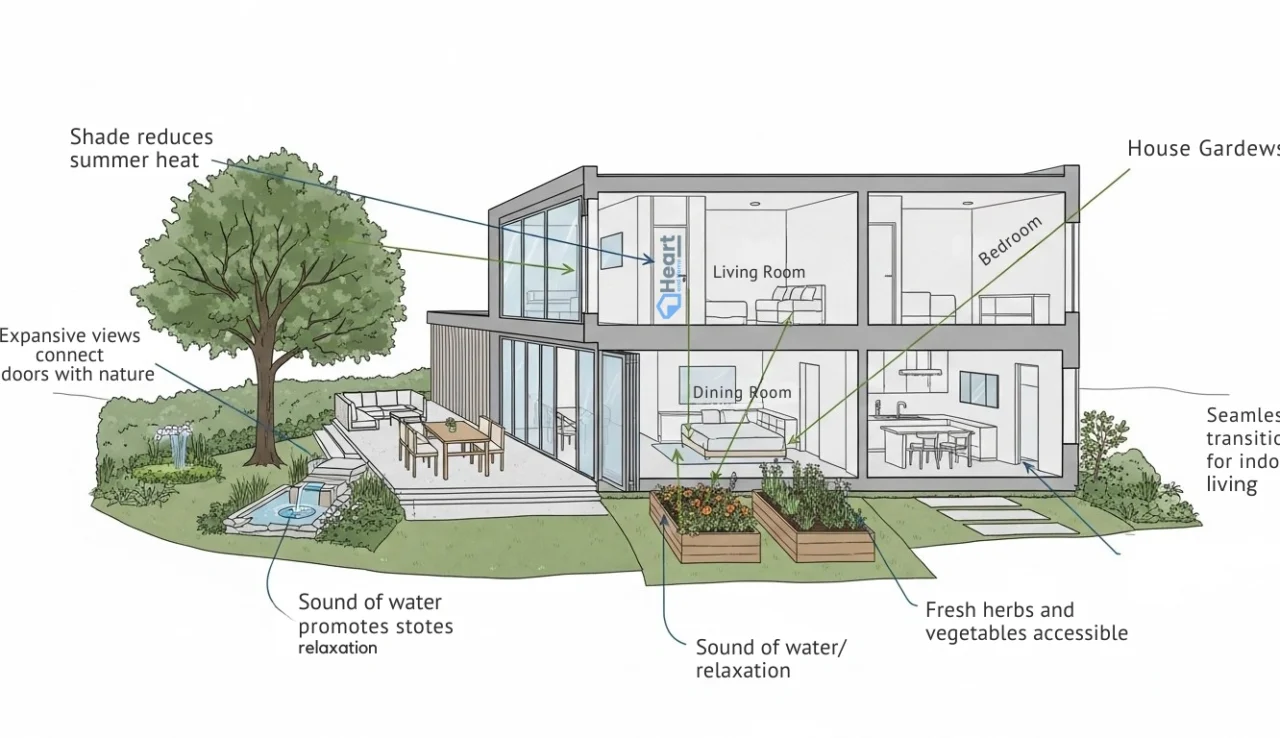
You probably don’t even think about it, but the trees and shrubs around your house can modify your indoor temperature by as much as several degrees.
Deciduous trees to the south and west shade your walls and windows from harsh summer rays. They lose their leaves in winter and allow warm sunlight to stream in, unimpeded.
According to the U.S. Department of Energy, properly positioned trees can reduce air-conditioning needs by as much as 25 percent. That’s actual money you’re saving each year.
Evergreens and tall hedges on the north side act as windbreaks. They prevent cold air from coming into contact with your outside walls in the winter.
Key takeaways for temperature control through landscaping:
- Plant deciduous trees on the south and west sides for summer shade and winter sun
- Use evergreen hedges on the north side as natural windbreaks
- Create a buffer zone of shrubs around your foundation to insulate against temperature swings
- Choose native species that grow well without constant maintenance
Natural Light Changes Everything Inside Your Home
A room filled with light seems larger and more welcoming. But for many of us in the Northern Hemisphere, we focus only on indoor lighting solutions and completely overlook what’s going on right outside our windows.
Light-colored gravel, pale blooms and reflectives on the ground can bounce sunlight into spaces that might otherwise feel dim. Conversely, an overgrown hedge outside your living room window may turn a light-filled space into something that feels like a cave.
Designers call this “borrowed scenery.” Your indoor spaces visually take inspiration from the beauty and expansiveness of the landscape on the other side of glass. A petite living room with an innovative garden view can seem twice as large.
Simple ways to maximize natural light through landscaping:
- Replace dark mulch near windows with light-colored stone or gravel
- Trim overgrown shrubs that block window light
- Plant low-growing flowers beneath windows instead of tall bushes
- Use reflective surfaces like light pavers on patios near glass doors
Outdoor Plants Quietly Improve Your Indoor Air Quality
It might seem like air quality is something that only matters indoors. Todos los Filtros They are air purifiers, HVAC filters, ventilation systems. Yet the plants that grow around your home filter the air before it enters your doors and windows.
Dust, pollen and pollutants are naturally held captive by trees and shrubs. If you have a well-planted buffer zone around your home, less particulate matter will make its way indoors. This is especially critical if you live near a busy road or in an urban environment.
Some plants give off compounds called phytoncides. Studies consistently show these lower stress hormones and raise immune function. So, not only is your landscape nice to look at. It’s actively improving the air inside your home.
Best plant choices for improving air quality around your home:
- Oak, maple, and cedar trees for filtering airborne pollutants
- Dense evergreen shrubs near roads to trap dust and exhaust particles
- Native grasses and ground covers that do not require chemical treatments
- Flowering plants that attract pollinators and support a balanced ecosystem
Landscape Design Works as a Natural Noise Barrier
Living near a busy street is exhausting. Traffic noise creeps into your home, ruins your sleep, and makes it hard to enjoy a quiet evening.
Dense plantings, earth berms, and layered shrubs absorb and deflect sound waves naturally. A thick row of evergreens can work like a living sound wall. No amount of double-pane glass can fully match that on its own.
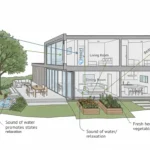
Water features add another powerful layer. A small fountain or a gentle stream creates calming white noise that covers up unwanted sounds. You can enjoy it from inside with the windows open, and it lowers your stress without you even noticing.
Effective noise-reducing landscape strategies:
- Plant a thick row of mixed evergreens along noisy boundaries
- Add a small water fountain near bedroom or living room windows
- Build low earth berms with dense plantings for maximum sound absorption
- Layer tall trees, mid-height shrubs, and ground cover for a multi-level sound barrier
Visual Flow Makes Indoor Rooms Feel Much Bigger
One of the most powerful effects of landscape design on indoor living is visual continuity. When your outdoor design flows naturally into your interior design, rooms feel more spacious and intentional.
Picture a dining room with glass doors that open onto a patio made from the same stone as your kitchen floor. Your eye does not stop at the doorframe. It keeps traveling outward, and suddenly the room feels twice as big.
Color plays a huge role too. If your living room features warm earth tones, a garden with terracotta pots, warm flowers, and natural wood outside the window supports that palette beautifully.
Tips for creating visual flow between indoors and outdoors:
- Match patio materials to interior flooring for smooth transitions
- Coordinate outdoor plant colors with your indoor color scheme
- Keep outdoor and indoor furniture styles complementary
- Use large windows or glass doors to blur the boundary between spaces
Privacy Landscaping Helps You Relax More Indoors
Here is something that does not get enough attention. When neighbors can see directly into your living room or bedroom, you behave differently inside your own home. You keep curtains closed. You feel on edge. You never fully relax.
Privacy landscaping fixes this in a way that fences and blinds simply cannot. Tall ornamental grasses, layered hedges, and climbing vines on pergolas create living screens that block sightlines naturally.
The result is simple. You open your curtains. You let light flood in. You use your rooms the way they were meant to be used, openly and comfortably. You do not think about why you suddenly feel more at ease. You just do.
Best privacy landscaping options that boost indoor comfort:
- Tall ornamental grasses like Miscanthus or Pampas grass for soft screening
- Layered evergreen hedges for year-round privacy
- Climbing vines on trellises or pergolas near windows
- Bamboo screens for fast-growing and dense coverage
Outdoor Living Spaces Extend Your Home Square Footage
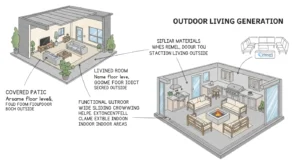
When your landscape has functional areas such as covered patios, fire pits and outdoor kitchens, it can change how you inhabit indoor spaces too.
It’s not just your living room as a gathering spot any longer. Your kitchen doesn’t need to tackle every dinner party single-handed. That in turn means less crowding, less wear and tear on interior spaces, and a home that can feel considerably larger.
The magic works in the transition zones. A covered porch, at living room floor level, with many of the same materials and stylistic touches does not take you outside. It’s like walking into another room that just so happens to have a sky as its roof.
Ways to create smooth indoor-outdoor transitions:
- Build patios at the same floor level as the rooms next to them
- Use similar materials and color palettes inside and out
- Add covered outdoor areas for year-round usability
- Install wide sliding doors or retractable glass walls for a flexible boundary
Seasonal Color Sets the Emotional Tone of Your Home
The view from your windows changes with the seasons, and that changing landscape has a real emotional impact on how your indoor spaces feel.
A garden with four-season interest, including spring blossoms, summer greenery, fall foliage, and winter structure, keeps your home feeling alive and dynamic all year long.
Now compare that to a neglected yard with brown patches and dead shrubs. That view bleeds into your indoor experience whether you notice it or not. It makes rooms feel dull and closed off.
Research in environmental psychology confirms this. Views of nature from indoor spaces reduce stress, sharpen focus, and increase life satisfaction. Your landscape is literally a wellness tool for your household.
Plants for four-season visual interest from indoors:
- Cherry blossoms or dogwoods for spring color
- Hydrangeas and lavender for vibrant summer displays
- Japanese maples and ornamental grasses for stunning fall foliage
- Evergreens and berry-producing shrubs for winter structure and color
Smart Landscaping Adds Real Financial Value
Beyond comfort and beauty, a well-designed landscape increases your property value. The American Society of Landscape Architects estimates that professional landscaping can add 15 to 20 percent to a home’s worth.
But the financial benefits go deeper than resale. Lower energy costs from tree shade, reduced maintenance from native plants, and fewer pest problems from a balanced ecosystem all save money quietly, year after year.
When you see landscape design as an investment in both indoor living quality and financial value, hiring a professional designer starts looking like one of the smartest moves you can make.
Financial benefits of thoughtful landscape design:
- 15 to 20 percent increase in overall property value
- Up to 25 percent reduction in cooling costs with strategic tree placement
- Lower water bills with drought-tolerant native plantings
- Reduced long-term maintenance expenses compared to neglected yards
FAQs
Does landscape design really affect indoor temperature?
Yes, it does. Shade trees on the south and west sides can cut cooling costs by up to 25 percent. Windbreaks on the north side reduce heat loss in winter. It is one of the most affordable ways to manage indoor climate without touching your HVAC system.
What plants improve indoor air quality from outside?
Native trees like oak, maple, cedar, and juniper are excellent natural air filters. Dense plantings near your home trap dust and pollutants before they drift through windows and doors. Avoid chemically treated plants, as pesticides can actually make air quality worse.
Can landscaping reduce noise inside my house?
It absolutely can. Dense evergreen hedges, earth berms, and layered plantings absorb sound waves effectively. Adding a water feature introduces calming white noise that covers traffic and neighborhood sounds, making your home noticeably quieter.
How does landscape design make rooms feel bigger?
When outdoor materials, colors, and sightlines match your interior design, the eye sees the space as continuous. Glass doors that open onto a coordinated patio visually extend a room far beyond its actual walls.
Is professional landscape design worth the investment?
For most homeowners, yes. It boosts property value by 15 to 20 percent, cuts energy bills, and improves daily comfort. The long-term financial and lifestyle returns typically pay back the initial cost within just a few years.
What is the easiest landscape change to improve my indoor experience?
Start with the view from your most-used rooms. Clean up overgrown plants that block windows, add light ground cover to bounce sunlight indoors, or plant a small flower garden outside your kitchen window. Even small changes make a noticeable difference.
Final Thoughts
Your home doesn’t stop at the walls. The land outside your shelter is a lively, functional extension of every room within. It influences your comfort, health, mood, energy bills and how spacious your home feels. Smart landscape design is an investment that pays off for your yard and beyond. You will be elevating your indoor quality of living, and that is an investment worth investing in on a daily basis.