
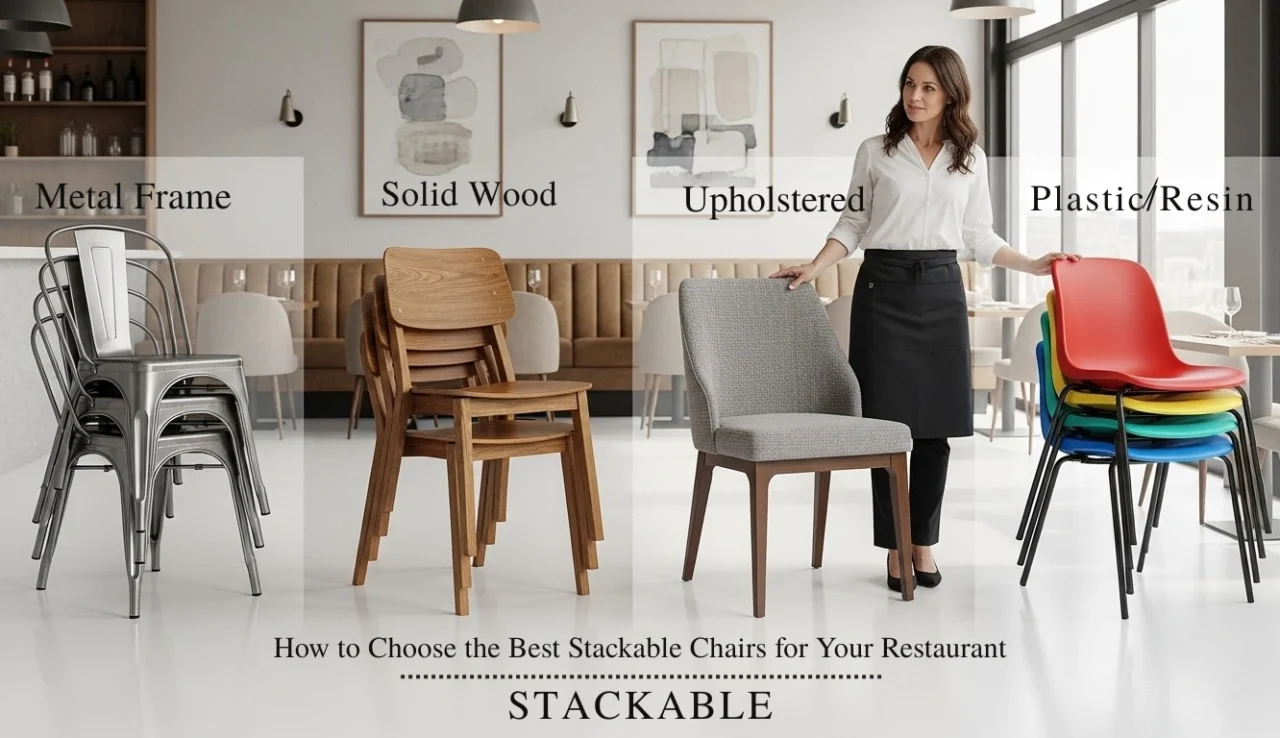
Nobody opens a restaurant dreaming about chairs. You dream about the food, the vibe, the packed Friday nights. But here’s the truth the wrong chairs can quietly ruin all of that. Wobbly seats annoy guests. Heavy furniture slows down your team. And cheap-looking chairs make even great food feel forgettable.
Choosing the best stackable chairs for your restaurant sounds simple until you start shopping. Metal, wood, plastic, upholstered — every seller swears theirs are the best. So how do you actually decide?
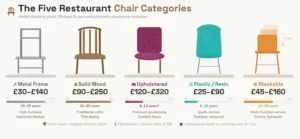
All 5 Stackable Chair Types
Here’s your bird’s-eye view before we break down each type individually.
Metal Frame Stackable Chairs
Metal chairs are the workhorses of the restaurant world. Built from steel or aluminum, they handle years of heavy use without bending, cracking, or losing shape. Steel versions are heavier and more rugged. Aluminum models are lighter and better suited for patios.
Modern metal chairs have moved far beyond the cold, industrial look. Today you’ll find powder-coated finishes in dozens of colors, curved backs for comfort, and designs ranging from vintage farmhouse to sleek minimalist. Some even come with wooden or padded seat inserts.
The stacking efficiency is excellent eight to twelve chairs per column which makes end-of-night cleanup and event transitions fast and easy.
| Specification | Steel Frame | Aluminum Frame |
|---|---|---|
| Weight | 10–15 lbs | 6–10 lbs |
| Durability | Extremely High | High |
| Rust Resistance | Needs powder coating | Naturally rust-resistant |
| Best For | Indoor high-traffic | Outdoor / patio use |
| Price Range | $50–$120 | $40–$100 |
| Stack Height | 8–10 | 10–12 |
But Points: What to Watch Out For:
- Bare metal seats feel cold and hard not ideal for long, leisurely meals unless you add cushions
- Steel chairs without proper powder-coated finish will develop rust, especially in humid climates
- Metal legs can scratch hardwood and tile floors if floor glides are missing or worn out
- Cheaper metal chairs may have visible weld marks that look unpolished in upscale settings
- They can be noisy when guests scoot them across hard floors
Solid Wood Stackable Chairs
Solid wood brings a warmth and character that no other material can match. Whether you choose oak, beech, walnut, or ash, each chair has its own personality natural grain patterns, rich tones, and a feel that guests genuinely notice. Wood signals quality, and that perception positively influences how people experience your food and service.
The trade-off is weight and care. Wood chairs typically weigh twelve to twenty pounds each, making them harder for staff to move. You can only stack four to six at a time. And they need regular maintenance quick spill cleanups, periodic refinishing, and attention to scratches.
That said, many owners love the patina that develops over time. A few years of honest wear gives wood chairs a character that new furniture simply can’t replicate.
| Wood Type | Durability | Weight | Look & Feel | Price Range |
|---|---|---|---|---|
| Oak | Very High | Heavy | Traditional, warm | $100–$200 |
| Beech | High | Medium-Heavy | Smooth, versatile | $80–$180 |
| Walnut | High | Medium | Rich, dark tones | $150–$250 |
| Ash | High | Medium | Light, modern grain | $90–$180 |
| Pine | Moderate | Light | Budget-friendly, soft | $60–$120 |
But Points: What to Watch Out For:
- Heavy weight makes setup, teardown, and daily rearrangement harder for staff
- Lower stacking capacity (4–6 max) means more storage space is needed
- Spills must be wiped immediately or they’ll stain and damage the finish
- Not suitable for outdoor use unless specifically treated with weather-resistant coatings
- Higher upfront cost compared to metal or plastic alternatives
- Wood can warp or crack in environments with extreme temperature or humidity changes
Upholstered Stackable Chairs
When comfort is your top priority, upholstered chairs are the clear winner. Padded seats and backs covered in fabric, vinyl, or leather make a noticeable difference during longer meals and comfortable guests tend to order more courses, more drinks, and stay longer.
The design possibilities are enormous. Hundreds of fabric colors, textures, and patterns let you match your chairs precisely to your restaurant’s interior. Leather adds luxury. Performance fabrics resist stains and hold up to daily commercial use.
The reality of maintenance, though, is that fabric absorbs spills, odors, and the inevitable mystery stain. You’ll clean these chairs more often than any other type, and you should budget for reupholstering every three to five years on your highest-use seats.
| Material | Comfort | Durability | Cleaning Ease | Look & Feel | Price Range |
|---|---|---|---|---|---|
| Fabric | High | Moderate | Difficult | Wide variety | $120–$250 |
| Vinyl | Moderate–High | High | Very Easy | Modern, smooth | $100–$200 |
| Faux Leather | High | High | Easy | Luxurious | $150–$300 |
| Genuine Leather | Very High | Very High | Moderate | Premium | $250–$400+ |
| Performance Fabric | High | High | Moderate | Professional | $150–$280 |
But Points: What to Watch Out For:
- Fabric absorbs spills, odors, and stains requiring more frequent deep cleaning
- Reupholstering costs add up every 3–5 years, especially on high-traffic seats
- Bulkier design limits stacking to only 4–6 chairs per column
- Stacking and unstacking can damage the upholstery if not done carefully
- Foam padding must meet CAL 117 fire retardant standards for commercial use — always verify this before buying
- Not suitable for outdoor or patio use unless specifically designed with outdoor-rated materials
- Higher price point makes them a bigger upfront investment
Plastic / Resin Stackable Chairs
Don’t let the word “plastic” fool you. Commercial-grade resin chairs are engineered from reinforced polypropylene that resists cracking, fading, and moisture. They’re lightweight, affordable, weather-proof, and far more attractive than the flimsy folding chairs you might be imagining.
The stacking ability is unmatched ten to fifteen chairs per column and each chair weighs just four to eight pounds. Your staff will genuinely thank you at closing time. Cleaning is effortless: hose them down or wipe with disinfectant and they’re ready to go.
Design has improved dramatically. Modern resin chairs come in sleek shapes, bold colors, and textured finishes that mimic more expensive materials. Some premium models look surprisingly upscale.
| Resin Type | Durability | UV Resistance | Weight | Best For | Price Range |
|---|---|---|---|---|---|
| Polypropylene | High | Moderate | 4–6 lbs | Indoor/outdoor casual | $20–$50 |
| Reinforced Polypropylene | Very High | High | 5–8 lbs | Heavy commercial use | $40–$70 |
| Fiberglass Resin | Very High | Very High | 6–10 lbs | Outdoor/patio premium | $50–$90 |
| Recycled Resin | High | Moderate | 5–8 lbs | Eco-conscious venues | $35–$65 |
But Points: What to Watch Out For:
- Some diners associate plastic with cheap or low-quality not ideal for fine dining or upscale concepts
- Less comfortable than upholstered or wood chairs for extended seating beyond 30 minutes
- Cheaper models can crack or become brittle after prolonged sun exposure
- Limited weight capacity compared to metal (typically maxes out at 300 lbs)
- Color can fade over several years of direct UV exposure without proper UV stabilizers
- Doesn’t offer the warmth or natural character that wood provides
- Can feel slippery without textured seat surfaces
Stackable Chairs: Why Every Restaurant Needs Flexible Seating
Beyond specific materials, the stackable design itself is what makes these chairs essential for modern restaurants. Flexibility is the core benefit.
You might seat forty for Saturday brunch, clear the room for a private party at noon, and set up an intimate dinner arrangement by evening. Without stackable chairs, every transition becomes a logistical nightmare. With them, your team reconfigures the entire dining room in minutes.
| Stacking Method | Space Saved | Stability | Ease of Use | Best For |
|---|---|---|---|---|
| Vertical Stack | Moderate | High | Easy | Most restaurants |
| Nesting (Seat-in-Seat) | Very High | Moderate | Very Easy | Small storage areas |
| Interlocking Stack | High | Very High | Moderate | Banquet halls, events |
| Folding + Stacking | Very High | Moderate | Easy | Multi-purpose venues |
But Points: What to Watch Out For:
- Stacking higher than manufacturer recommendations creates a serious safety hazard for staff
- Frequent stacking and unstacking causes wear on contact points inspect chairs regularly
- Not all stackable chairs are equally stable when stacked test before buying in bulk
- Floor glides wear out and must be replaced to prevent floor damage and noise
- Some stackable designs sacrifice ergonomic comfort for stacking convenience
- You’ll need proper chair carts or dollies for safe transport budget $50–$100 per cart
Weight Capacity, Safety Certifications & Fire Standards
This is where most buyers and most guides drop the ball. A great-looking chair that doesn’t meet safety codes can get you fined or force a full replacement.
Static vs. Dynamic Weight:
Manufacturers love advertising big weight numbers, but there’s a critical distinction. Static weight means a motionless load placed on the chair. Dynamic weight accounts for real use shifting, rocking, standing up. A chair rated for 1,000 lbs statically might only handle 400 lbs dynamically. Always ask for the dynamic rating.
| Certification: | What It Covers: | Why It Matters: |
|---|---|---|
| ANSI/BIFMA | Durability, stability, weight capacity | Gold standard for commercial furniture in North America |
| CAL 117 | Fire retardant foam | Required for upholstered chairs in most commercial buildings |
| BIFMA X5.4 | Public and lounge seating | Relevant for waiting areas and lounge dining |
| Greenguard | Low chemical emissions | Protects indoor air quality in enclosed dining spaces |
| FSC | Responsibly sourced wood | Confirms wood comes from sustainable forests |
- “Weight tested to 1,000 lbs” often means static testing only — real-world capacity is much lower
- Not all manufacturers voluntarily pursue BIFMA certification — ask for documentation
- Fire inspectors will check foam certifications in upholstered chairs — non-compliance means fines
- Cheap imports may skip safety testing entirely — always verify before placing large orders
- Greenguard certification matters more than you think in small, enclosed dining rooms with poor ventilation
Sustainability & Eco-Friendly Stackable Chairs
Almost nobody in the restaurant furniture industry talks about this honestly but your customers are starting to care.
Over 60% of millennial and Gen Z consumers consider a business’s environmental practices when choosing where to eat. Your furniture is part of that story.
| Eco Feature: | What It Means: | Available In: |
|---|---|---|
| Recycled Polypropylene | Chair made from recycled plastic | Plastic / Resin chairs |
| FSC-Certified Wood | Wood from responsibly managed forests | Solid wood chairs |
| Low-VOC Finishes | Fewer toxic chemicals in paint and stain | All chair types |
| Recyclable at End of Life | Chair can be recycled, not landfilled | Metal and some resin chairs |
| Longevity | Longer lifespan = less waste | Metal, quality wood |
But Points: What to Watch Out For:
- “Eco-friendly” is an unregulated marketing claim always ask for specific certifications like FSC or Greenguard
- Recycled resin chairs may cost 10–15% more than standard resin options
- FSC-certified wood chairs are limited in supplier availability, which can extend lead times
- The most sustainable choice is often the most durable one a metal chair lasting 15 years beats a “green” plastic chair replaced every 3 years
- Low-VOC finishes sometimes require more frequent reapplication than standard finishes
Key Factors to Consider Before You Buy
Match Chairs to Your Brand:
Your chairs should tell the same story as your menu and décor. Rustic Italian? Go with warm wood. Sleek cocktail bar? Choose industrial metal. Beachside tacos? Try bold-colored resin.
Calculate Real Durability:
A busy restaurant uses each chair four to six times daily. Over five years, that’s 7,000+ uses per chair. Cheap chairs that break in a year cost you more than quality chairs that last a decade. Always think in cost-per-year, not sticker price.
Match Comfort to Dining Style:
Fast-casual guests need a functional seat for fifteen minutes. Fine-dining guests expect two-hour comfort. Buy accordingly.
Measure Your Storage First:
Know your storage dimensions and how many chairs you need to store. A chair that stacks only four high won’t help if you need to store forty in a small closet.
Invest in Chair Carts:
Chair carts with caster wheels let one person move a dozen stacked chairs at once. Multi-mover carts with larger wheels handle heavier chairs and outdoor terrain. The $50–$100 you spend on a good dolly pays for itself within a month.
Calculate How Many Chairs You Need:
Start with your maximum seating capacity, then add 10–15% extra for breakage, rotation, and event overflow. Don’t forget outdoor and waiting areas.
Final Thought
At the end of the day, the best stackable chair for your restaurant is the one that fits your space, matches your brand, respects your budget, and still feels great after the ten-thousandth guest sits down. Don’t overthink the decision but don’t rush it either. Sit in the chairs. Stack them yourself. Carry them across the room. That five-minute test tells you everything a product listing never will. Your guests will feel the difference, your staff will appreciate it, and your bottom line will show it for years to come.