Your sofa is more than just a piece of furniture it’s where life happens. Nights in watching movies, Sunday afternoon naps, heart and home talks with friends. Getting this purchase right is crucial because a good sofa beds can last you for a decade or more.
Step into any furniture store and you’ll find hundreds of choices. Various sizes, styles, materials and price points all vie for your attention. This guide will tell you everything you need to know in order to find the perfect one.
| Room Size | Recommended Sofa Type | Approximate Sofa Dimensions |
|---|---|---|
| Small (under 150 sq ft) | Loveseat or Apartment Sofa | 50-70 inches wide |
| Medium (150-300 sq ft) | Standard 3-Seat Sofa | 72-89 inches wide |
| Large (300-500 sq ft) | Large Sofa or Sectional | 90-110+ inches wide |
| Open Floor Plan | L-Shaped Sectional | 95-130+ inches per section |
Start With Your Space Measuring Matter
Before falling in love with any sofa online, grab a tape measure. This single step prevents more buying regrets than anything else.
Measure your entire room first, noting width and length. Then measure the specific area where you plan to place the sofa. Account for windows, radiators, fireplaces, and built-in features.
Key spacing guidelines to remember:
- 18 inches between sofa and coffee table
- 36 inches between sofa and wall for walkways
- 7-10 feet between sofa and TV screen
- 2 inches clearance on each side of doorways for delivery
The Doorway Factor
And here what surprises people your sofa has to go through doors, and maybe a hallway, and possibly an elevator. 2. Measure each tight spot along the path from your front entrance to where you want the sofa to end up.
Many delivery teams can also take off those legs or cushions to make it easier. And if you have extra-narrow entryways, sofas with removable arms or mod modular designs that assemble within will be your new friends.
Understanding Sofa Size
Sofas come in more varieties than most people realize. The right size depends on your room and how you’ll use it.
- Loveseats and Apartment Sofas (50-75 inches): Perfect for smaller living room and studio apartments. These seat two comfortably and help small spaces feel open. Mid-century designs with clean lines and raised legs work particularly well here.
- Standard Three-Seat Sofas (72-89 inches): The classic choice for medium rooms. This size seats three adults and works as the centerpiece of most seating arrangements. It’s the most versatile option for everyday family use.
- Sectionals and L-Shaped Sofas (95+ inches): Ideal for larger rooms and open floor plans. They maximize seating while defining different zones in open spaces. Keep in mind that sectionals are harder to rearrange later if you like changing your layout.
Frame Construction: What’s Under the Hood
The frame is your sofa’s skeleton. What it’s made of determines whether your investment lasts a decade or sags within two years.
The Gold Standard: Kiln-Dried Hardwood
Quality sofas use kiln-dried hardwood frames typically oak, maple, or beech. The kiln-drying process removes moisture, preventing warping and cracking over time.
What to avoid:
- Particleboard (falls apart at joints)
- Cheap plastic frames
- Thin metal constructions that flex and squeak
Best joint types to look for:
- Mortise and tenon joints (strongest method)
- Double dowel joints (very durable)
- Corner blocks for extra reinforcement
Suspension Systems The Secret to Comfort
Between the frame and cushions sits the suspension system. This hidden component determines that “bounce” feeling and how well your sofa holds up.
Eight-Way Hand-Tied Springs
The absolute best option. Coil springs are tied at eight points using premium twine. This creates even support and distributes weight beautifully. Found mainly in higher-end furniture.
Sinuous Springs
S-shaped metal strips running front to back. More common and affordable than hand-tied springs. Quality versions use 8-gauge wire and last for years without losing shape.
Webbing
Polypropylene strips stretched across the frame. Found in budget options. Less durable and may stretch out over time with heavy use.
Cushion Fill Where Comfort Gets Personal
This is where personal preference matters most. Some people want cloud-like softness; others prefer firm support.
High-Density Foam
Provides firm, consistent support. Maintains shape well and requires minimal maintenance. Look for density of at least 1.8 pounds per cubic foot.
Pros:
- Holds shape over time
- Low maintenance
- Good for structured seating
Cons:
- Can feel stiff initially
- May harden slightly over years
Down and Feather
Delivers sink-in softness and that relaxed, inviting look. Perfect if you want to feel wrapped in comfort.
Pros:
- Luxuriously soft
- Creates elegant, lived-in appearance
- Excellent breathability
Cons:
- Requires daily fluffing
- Can trigger allergies
- More expensive
Hybrid Fills (Foam Core with Down Wrap)
The best of both worlds. Foam provides structure while down adds softness on top. Less maintenance than pure down but still needs occasional fluffing.
Polyester Fiber Fill
Budget-friendly alternative to down. Offers softness without allergen concerns. Quality varies clustered polyester holds up better than loose fill.
Fabric and Upholstery Option
Choosing upholstery means balancing how you want your sofa to look with how you actually live.
Performance Fabrics
Engineered to resist stains, repel liquids, and handle heavy use. Spills bead up on the surface rather than soaking in. Available in many textures including linen-look and velvet-like options.
Best for: Families with kids, pet owners, anyone who eats on the couch
Leather
Develops character over time with a beautiful patina. Naturally resistant to allergens and easy to wipe clean.
Types ranked by quality:
- Full-grain leather (highest quality, ages beautifully)
- Top-grain leather (sanded for uniform look)
- Bonded leather (mixed with synthetics, less durable)
- Faux leather (affordable look-alike)
Best for: Allergy sufferers, those wanting easy maintenance, classic style lovers
Natural Fabrics
Cotton offers breathability and year-round comfort but stains relatively easily. Linen brings casual elegance but wrinkles quickly. Wool resists stains naturally but can feel scratchy.
Best for: Breathable comfort, classic aesthetics
Velvet and Chenille
Luxurious and stunning as statement pieces. Both show wear patterns and attract pet hair easily.
Best for: Formal rooms, low-traffic spaces, style-focused buyers
Microfiber
Budget-friendly and stain-resistant. Feels soft like suede. Attracts lint and hair, requiring frequent cleaning.
Best for: Budget-conscious buyers, those without pets
Sofa Styles Explain
Contemporary and Modern
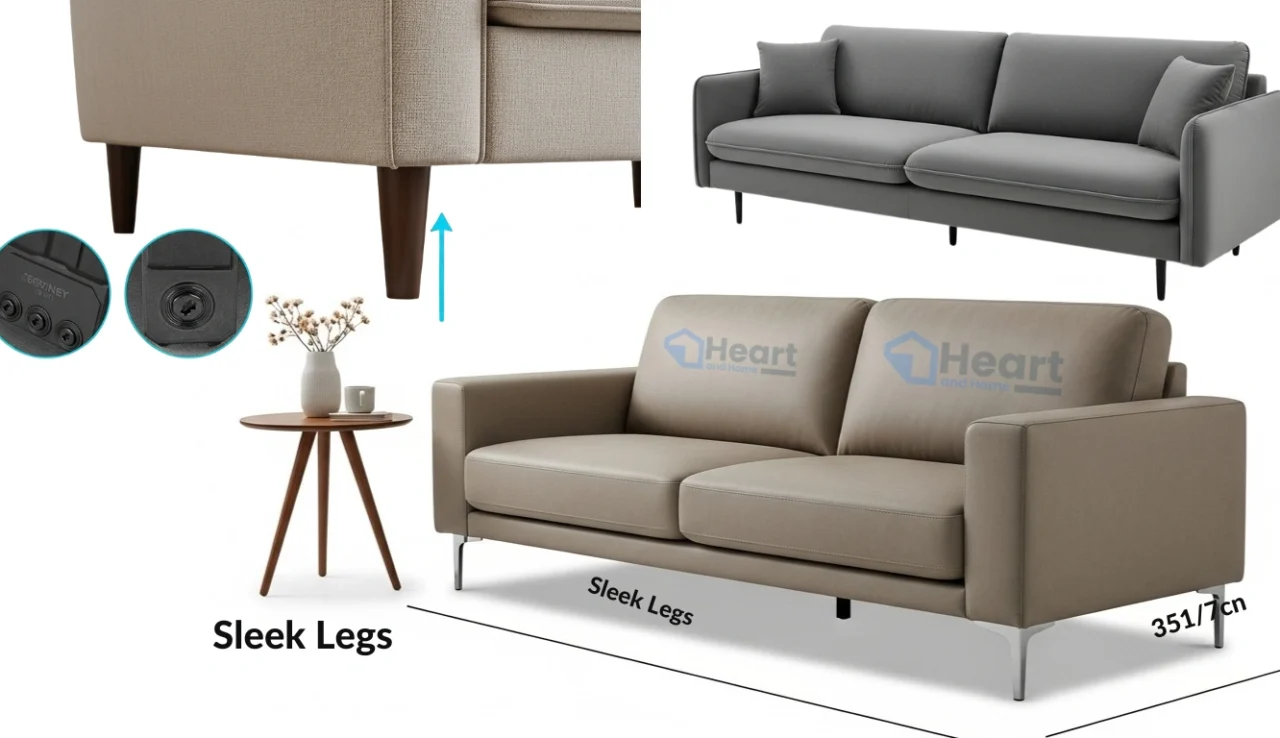
Clean lines, low profiles, minimal decoration. Track arms and exposed legs create visual lightness. Perfect for minimalist and mid-century spaces.
Traditional
Rolled arms, tufted backs, turned wooden legs. Anchors formal living rooms beautifully.
Transitional
Blends modern and traditional elements. Versatile enough to work with evolving decor styles.
Sectional and Modular
Maximum seating for large spaces. Modular options let you reconfigure as needed.
Special Consideration by Household Type
Families with Young Children
- Choose performance fabrics or leather
- Pick darker or mid-tone colors
- Look for rounded edges for safety
- Prioritize removable, washable covers
Pet Owners
- Select tightly woven fabrics
- Leather cleans easily but shows scratches
- Consider patterns that hide pet hair
- Plan for frequent vacuuming
Allergy Sufferers
- Leather is ideal (doesn’t trap allergens)
- Choose tightly woven fabrics if preferring fabric
- Avoid down cushions unless treated
Frequent Entertainers
- Deep sofas encourage lingering conversations
- Consider sectionals for maximum seating
- Darker upholstery hides party spills
FAQs
How much should I spend on a quality sofa?
Expect $2,000-$6,000 for a well-made sofa lasting 10+ years. Budget options under $1,000 often sacrifice construction quality. Designer pieces can exceed $10,000.
How long should a good sofa last?
Quality construction with proper care means 10-15 years or more. Lower-quality sofas may sag within 3-5 years.
Can I reupholster instead of buying new?
Yes, if the frame and suspension are solid. Costs typically run $1,500-$4,000 depending on size and fabric choice.
What’s the best sofa for small spaces?
Apartment sofas or loveseats with clean lines and raised legs. The visual space underneath makes rooms feel larger.
How do I clean my sofa?
Check the cleaning code on tags: W means water-based cleaners work, S means solvent-based only, W/S means both, X means vacuum only. Always test cleaning solutions on hidden areas first.
Should I buy online or in store?
In-store lets you test comfort and see true colors. Online offers more variety and often better prices. Many brands offer fabric swatches to order before committing.
Final Thoughts
Finding the right sofa requires homework, but it’s one of those investments that you’ll appreciate every day. And for years, this will be a part of your day. Spend some time measuring, get a solid sense of what’s inside any sofa you’re considering and be honest about how you live. A couch that fits with your real life that’s the sweet spot worth aiming for.