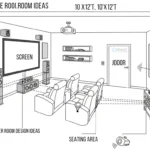
A small room can feel even more immersive because everything sits closer together. The screen fills your view. The sound wraps around you. Movie night suddenly feels special.
This guide explains how to design a small home theater that truly works. It covers layout, screen size, sound, lighting, storage, and comfort. It also includes planning tables and two practical steps most competitors forget.
Start With Purpose Before Buying Anything
Before shopping, decide what the room will be used for.
That answer changes the entire design.
Multi-use rooms benefit from:
-
Slim seating
-
Hidden storage
-
Flexible lighting
-
Wall-mounted TVs or retractable screens
Dedicated theaters allow darker walls, deeper sound, and a stronger cinema feel.
Choose the Screen First
Many homeowners start with speakers. That usually leads to layout problems.
Always choose the screen first.
TVs work best in brighter rooms.
Projectors create a larger, theater-style image but need light control.
| Seating Distance | TV Size | Projector Screen |
|---|---|---|
| 6–7 ft | 55–65″ | 80–92″ |
| 7–9 ft | 65–75″ | 92–110″ |
| 9–11 ft | 75–85″ | 110–120″ |
A screen that’s too large causes neck strain.
The right size creates comfort.
Layout Comes Next
Small rooms feel crowded quickly.
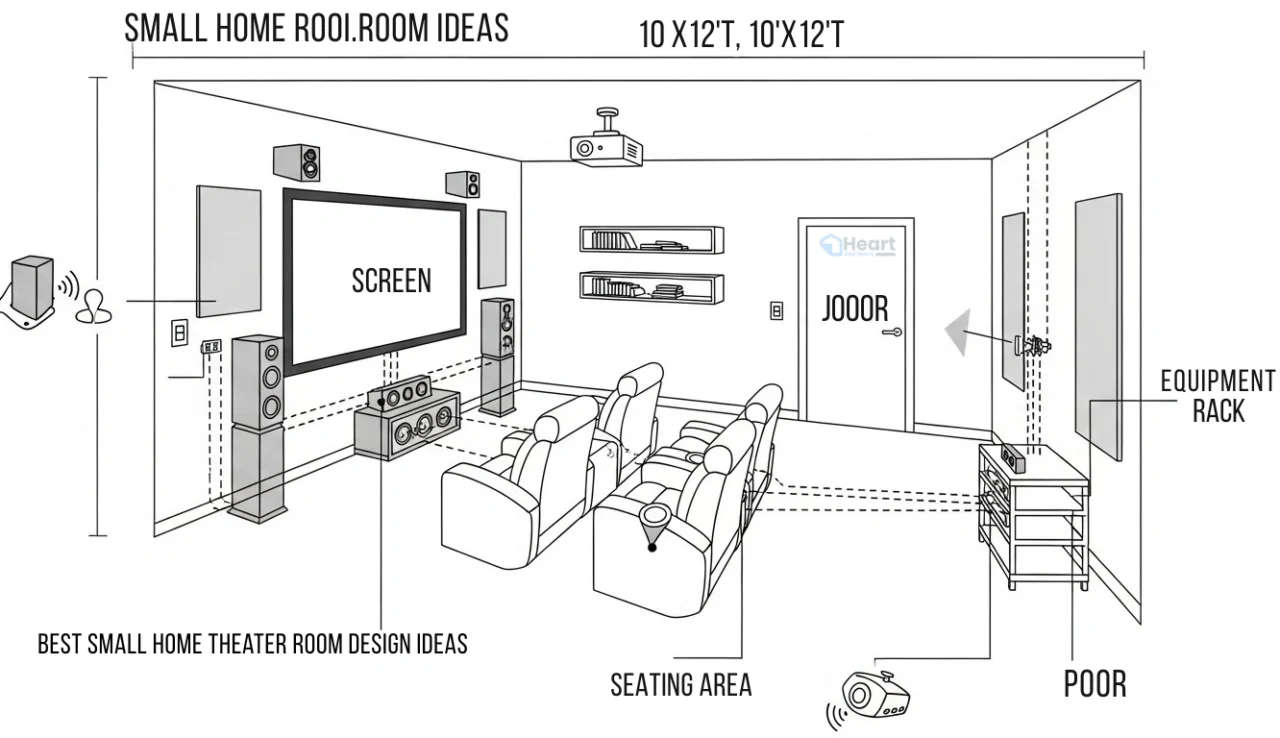
Follow these basics:
-
Leave one clear walking path
-
Center the screen with the main seat
-
Face the short wall when possible
-
Choose low-profile furniture
Avoid filling every corner. Open space improves comfort.
Improve Sound Before Buying Bigger Speaker
Sound reflects more in small rooms.
Before upgrading equipment, try:
-
Area rugs
-
Curtains
-
Fabric seating
-
Soft wall panels
These reduce echo and improve dialogue clarity.
Also, avoid oversized subwoofers. Clean bass feels better than loud bass.
Lighting Sets the Mood
Overhead lights ruin movie atmosphere.
Better options include:
-
Dimmable wall lights
-
Soft lighting behind the screen
-
Blackout curtains
Good lighting reduces eye strain and adds polish.
Cable Management and Storage
Loose wires make any room feel unfinished.
Better solutions:
-
Run cables along baseboards
-
Use paintable cable covers
-
Keep devices in one tech area
If space is tight, placing equipment outside the room can free up seating.
| Budget | Priority | Smart Upgrades | Avoid |
|---|---|---|---|
| Low | TV or projector | Curtains, rug | Huge subwoofer |
| Medium | Audio clarity | Acoustic panels | Flashy RGB |
| High | Seating comfort | Hidden wiring | Oversized screen |
Design Tricks That Make Small Rooms Feel Larger
-
Use dark, matte wall paint
-
Keep the front wall clean
-
Mount speakers when possible
-
Choose floating shelves instead of bulky cabinets
Small details make a big difference.
FAQs
What’s the smallest room for a home theater?
Around 10 × 12 feet works, but layout matters more than numbers.
TV or projector?
TVs suit bright rooms. Projectors suit dark, cinema-style spaces.
How can sound improve without expensive gear?
Rugs, curtains, and fabric furniture help more than many upgrades.
Final Thought
A great home theater doesn’t depend on size. It depends on smart choices. When light is controlled, sound is softened, and comfort comes first, even the smallest room can feel like a private cinema.