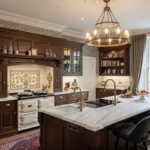
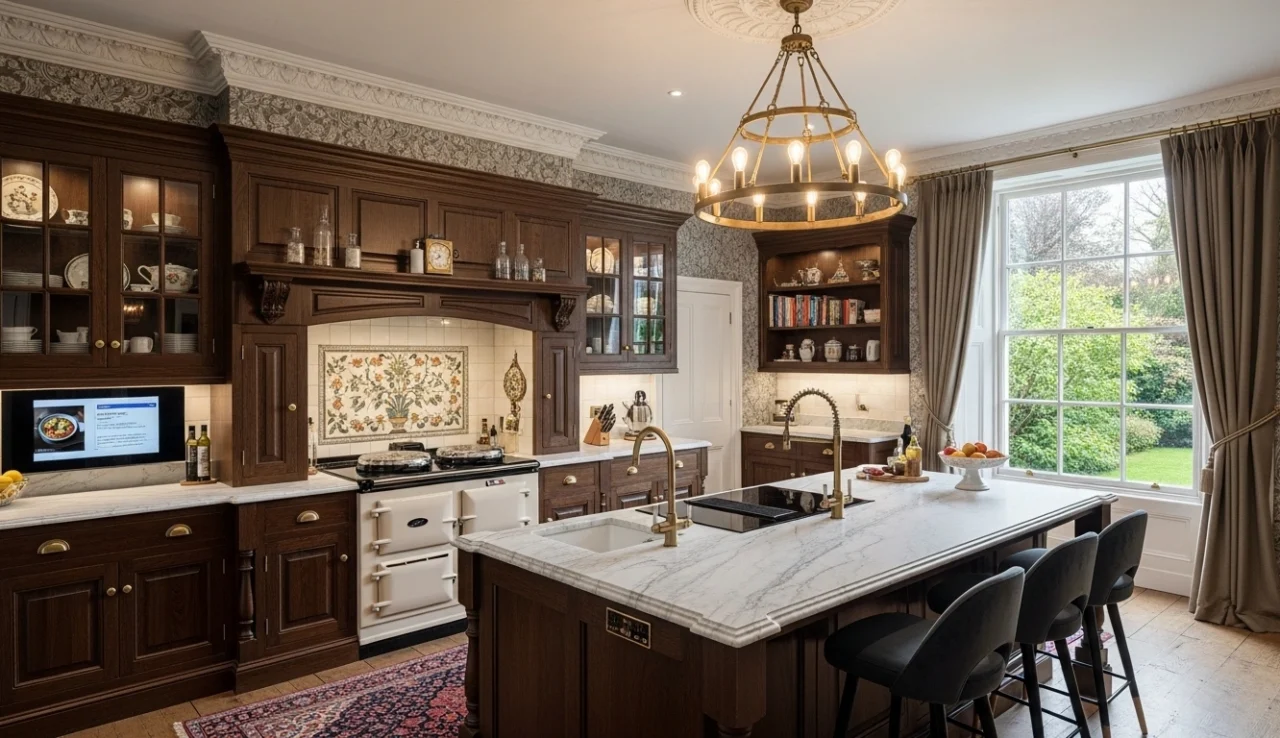
There something almost magnetic about a Victorian kitchen design. Maybe it’s the ornate cabinetry, the deep jewel-toned walls, or the way brass hardware catches the light just right. Homeowners in 2026 aren’t just admiring Victorian kitchens from afar they’re building them, renovating into them, and falling in love with a style that first captured the world over a century ago.
A Victorian kitchen in 2026 doesn’t look like a dusty museum piece, though. Today’s best designs blend 19th-century drama with modern functionality, smarter layouts, and fresh color palettes. Whether you’re planning a full renovation or just adding some period charm, this guide covers everything you need to know.
What Makes a Kitchen “Victorian”
The Victorian era spanned from 1837 to 1901 during Queen Victoria’s reign in Britain. It was a time obsessed with ornamentation, craftsmanship, and bold style. Subtlety wasn’t really the hallmark of the age.
In the kitchen, that meant detailed woodwork, rich colors, patterned floors, and layered textures. Crown molding, carved cabinetry, freestanding furniture, and large worktables were standard features. High ceilings with decorative plasterwork or tin tiles added depth and grandeur.
The 2026 Color Palette: Deeper, Richer and More
Forget stark whites and cool grays. In 2026, designers are choosing tones with emotional depth and warmth exactly what Victorian design does best.
Herbal greens are having a serious moment. Sage, olive, and forest green cabinets paired with natural wood and brass feel fresh yet historically accurate. Green was actually one of the most popular Victorian kitchen colors because it represented freshness and the natural world.
Smoked teals and moody burgundies are emerging as bold alternatives. Deep reds were avoided for years, but richer, darker shades are back with confidence in 2026. Paired with dark wood floors and antique brass, a burgundy Victorian kitchen feels surprisingly sophisticated.
The “new neutrals” mushroom tones, greige, and creamy off-whites replace the clinical feel of pure white. These shades shift with natural light throughout the day, giving your kitchen a living, breathing quality.
The top color choices for a Victorian kitchen in 2026 include:
- Sage green and olive green
- Smoked teal and deep ocean blue
- Moody burgundy and claret red
- Mushroom, greige, and warm cream
- Jewel tones like deep purple and rich navy
Cabinet Styles That Define the Victorian Kitchen in 2026
Cabinetry is where a Victorian kitchen truly comes alive. Getting the details right makes the difference between a kitchen that feels authentically period and one that just feels old.
Inset cabinetry is the gold standard. The doors sit flush within the frame, which reads as far more traditional and refined. Designers choose inset cabinets because they mirror the look of original Victorian pantries and storage rooms.
Raised panel doors with decorative molding create shadow lines that add visual depth. For a slightly less formal approach, shaker-style cabinets with beaded inset detailing offer a cleaner look that still nods to the period.
Glass-front cabinets let you display fine china and glassware, just like the Victorians loved to do. In 2026, designers are mixing glass-front uppers with solid lowers for a layered effect.
Crown molding along the top of wall cabinets draws the eye upward and adds grandeur. Extensive wood trim around doors, windows, and ceiling lines brings the architectural interest that defines the era.
Countertops and Surfaces: Where History Meets Function
Marble has been the star of Victorian kitchens since the era itself. Honed or leathered marble countertops bring an old-world softness that polished granite can’t replicate. Yes, marble needs more care but for many homeowners, the patina is part of the charm.
Leathered quartzite offers a convincing alternative with better durability. Taj Mahal quartzite has become a designer favorite for its gentle cream and gold tones that match Victorian palettes beautifully.
Butcher block countertops work wonderfully on islands, especially for creating that freestanding worktable look. Oak, walnut, and cherry are all historically appropriate choices.
For the backsplash, 2026 is all about pattern and texture. Popular options include:
- Encaustic tiles with geometric or floral motifs
- Hand-painted ceramic tiles
- Black and white mosaic designs
- Vintage tin backsplash panels
- Period-appropriate wallpaper protected by glass
Flooring Options That Ground Your Victorian Kitchen
The classic black-and-white checkerboard floor remains iconic for Victorian kitchens. In 2026, designers are softening the pattern with updated colorways cream and terracotta, beige and charcoal, or sage and white give geometric impact without the stark contrast.
Herringbone wood floors are another historically accurate option surging in popularity. They add elegance and movement, working especially well in darker stains like walnut or mahogany.
Encaustic cement tiles with intricate Victorian patterns make a stunning statement. They’ve been manufactured the same way since the 1800s, so they carry authentic historical character. Layer a quality runner or traditional rug over these floors for added warmth a technique the Victorians themselves used.
Victorian Wallpaper and Textiles: The Layers That Bring the Room to Life
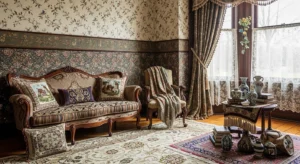
Most design guides gloss over this, but wallpaper and textiles are some of the most impactful ways to make a kitchen feel authentically Victorian.
Wallpaper is making a thoughtful comeback. You don’t need to cover every wall. Use it sparingly as a statement wall or within a defined panel for a modern feel. William Morris-inspired prints, botanical motifs, and small-scale damask patterns all work beautifully above chair rail height or inside shelving nooks.
Window treatments are equally important. Heavy drapes paired with lace curtains were a Victorian signature. Café curtains in linen offer privacy at the lower half while letting light flood in from above. Full-length curtains in velvet or jacquard frame windows and soften hard kitchen surfaces.
The smaller textile details matter too:
- Damask tablecloths and embroidered napkins
- Quality linen tea towels
- Patterned runners on hardwood or tile floors
- Decorative seat cushions on dining chairs
These are also the most budget-friendly ways to add period character without permanent changes.
Stain Glass and Decorative Windows: A Signature Victorian Touch
If one feature instantly says “Victorian,” it’s stained glass. Gorgeous stained glass windows or clear panels with decorative leading were a hallmark of the era, and they bring unmatched artistry to a kitchen.
If you already have original stained glass, protect it and let it be the star of the room. If not, you’ve still got plenty of options:
- Custom stained glass panels for windows or transoms above doorways
- Stained glass inserts in cabinet doors
- Decorative window film for a budget-friendly alternative
- Small hanging stained glass pieces in front of windows
Even small accents add color, artistry, and a strong Victorian identity. It’s one of those details visitors always notice and remember.
The Butler’s Pantry: A Victorian Feature Worth Reviving
In Victorian homes, the butler’s pantry was a small auxiliary room between the kitchen and dining room. It served as a staging area for meals and storage for fine china, silver, and linens. In 2026, it’s making a strong comeback.
Modern butler’s pantries don’t need to be large. Even a narrow galley space off the main kitchen works. Use it for dry goods storage, a coffee station, extra prep space, or somewhere to hide small appliances.
Line the walls with open shelving or glass-front cabinets, add period lighting, and you’ve created a space that’s both functional and authentically Victorian. Some homeowners are incorporating architectural salvage antique sliding glass doors, reclaimed hardware, and vintage fixtures for layers of genuine character.
Lighting That Sets the Mood
Victorian kitchens relied on layered, dramatic lighting. Your 2026 kitchen should do the same.
A statement chandelier over the island or dining table is almost non-negotiable. Crystal, wrought iron, or candle-style chandeliers all work depending on your aesthetic.
Pendant lights with Victorian designs schoolhouse fixtures, bell-shaped glass shades, or rustic lanterns provide focused task lighting while contributing to the period feel.
Wall sconces add warmth and eliminate dark corners, which matters especially in kitchens with darker paint colors.
A smart trick designers are using in 2026: combine antique-reproduction fixtures with modern dimming technology. You get the visual charm of a period light with adjustable brightness for different times of day.
The best approach includes all three layers:
- Ambient lighting (chandeliers, overhead fixtures)
- Task lighting (pendants over islands, under-cabinet strips)
- Accent lighting (wall sconces, display cabinet lights)
Hardware, Fixtures, and the Details That Complete the Look
The smallest elements often make or break a Victorian kitchen.
- Brass and copper hardware are more popular than ever. Unlacquered brass, which develops a natural patina over time, is the top choice for homeowners who want genuine character.
- Farmhouse apron-front sinks in fireclay or porcelain anchor the working area with period authenticity. Pair yours with a bridge faucet featuring cross handles or knob controls.
- Hanging pot racks in copper or wrought iron serve as both functional storage and decorative display. Victorian kitchens celebrated their tools, and showing off copper pots and cast iron cookware honors that tradition.
- Open shelving stocked with vintage china, blue-and-white pottery, or antique glassware adds personality. Displaying vintage tea sets reflects the Victorian era’s tea culture beautifully. Curating a shelf display is one of the easiest and most affordable ways to bring Victorian character into your kitchen.
The Victorian Kitchen Table: A Centrepiece Worth Celebrating
In authentic Victorian kitchens, the large central table was the primary workspace, the gathering spot, and often the most impressive piece of furniture in the room.
In 2026, many designers recommend freestanding tables instead of built-in islands for a more authentic feel. A solid wood dining table with turned legs or ornate carvings creates a focal point that anchors the entire room. Thick-topped tables in oak or mahogany contrast beautifully with marble perimeter counters.
If you prefer a built-in island, make it look like furniture:
- Add decorative legs or corbels
- Use a contrasting wood or paint color from the rest of your cabinets
- Top it with a different material than your perimeter counters
- Include furniture-style details like turned posts or panel detailing
These tricks make the island feel collected rather than built-in, which suits Victorian sensibilities much better.
Layout Ideas: Making Victorian Design Work in Modern Home
You don’t need an estate kitchen to pull off Victorian style. The key is understanding how Victorian layout principles translate to your actual space.
The kitchen triangle positioning your sink, stove, and refrigerator efficiently works perfectly here. Add a generous island or freestanding table and you’ve got a layout that’s both functional and visually compelling.
For larger kitchens, an L-shaped or U-shaped configuration with a substantial island provides counter space and storage while leaving room for decorative touches. Floor-to-ceiling cabinetry on one wall creates a custom built-in look.
For smaller kitchens, take inspiration from Victorian galley layouts. Detailed cabinetry, bold tile floors, and carefully chosen hardware make even compact spaces feel rich. Don’t shy away from darker colors with proper lighting, deep tones create a cozy jewel-box effect that makes a small room feel intentional, not cramped.
Smart Technology That Hides Behind Victorian Charm
Here’s something no other Victorian kitchen guide is really talking about: integrating smart home technology without ruining the aesthetic. You don’t have to sacrifice convenience for period style.
Appliances are the easiest starting point. Several manufacturers now offer retro-styled ranges, refrigerators, and dishwashers that combine Victorian looks with modern smart features. Panel-ready appliances sit behind custom cabinet fronts, so technology disappears behind the facade.
Smart lighting has caught up, too. Smart dimmer switches now come in styles matching Victorian push-button plates and toggle switches. Control your chandelier from your phone without any visible modern hardware.
More ways to sneak smart tech into a Victorian kitchen:
- Touchless faucets in bridge-style, cross-handle designs
- USB charging ports concealed inside drawers
- Under-cabinet LED strips hidden behind molding
- Smart speakers tucked into butler’s pantries or closed cabinets
- Induction cooktops with vintage-style knob controls
The goal is simple: your kitchen should feel like stepping back in time while quietly offering every convenience of 2026.
Sustainable Victorian: Eco-Friendly Approaches to Period Design
Sustainability fits naturally into the Victorian ethos. The Victorians built things to last, repaired rather than replaced, and valued craftsmanship over disposability. Channeling that spirit in 2026 means making choices that are both green and authentic.
Reclaimed wood is your best friend. Salvaged timber from old barns, churches, or demolished buildings brings genuine age and character to cabinetry, shelving, and flooring that new material can’t duplicate.
Low-VOC paints deliver rich Victorian pigments without harmful chemicals. Brands like Farrow & Ball and Benjamin Moore’s Natura line offer gorgeous period colors in eco-friendly formulations.
Energy-efficient appliances in vintage housings combine sustainability with style. LED lighting inside Victorian fixtures uses a fraction of the electricity while producing warm-toned light nearly indistinguishable from old filament bulbs.
More sustainable choices for your Victorian kitchen:
- Recycled glass countertop surfaces
- Locally quarried stone instead of imported marble
- Energy Star-rated appliances with custom vintage panels
- Solid hardwood cabinets that last decades instead of cheap particle board
- Antique and salvaged hardware instead of new reproductions
The most sustainable thing you can do is invest in quality materials that won’t need replacing in five years. The Victorians understood this instinctively they built kitchens that lasted generations.
Final Thought
A Victorian kitchen is really about celebrating craft, character, and the belief that your everyday spaces deserve beauty. You don’t need a mansion or a massive budget to make it happen — you just need an eye for detail and the willingness to choose materials and finishes that tell a story. Start with one or two elements that speak to you, build from there, and let the kitchen evolve naturally. The Victorians never rushed a good thing, and neither should you.