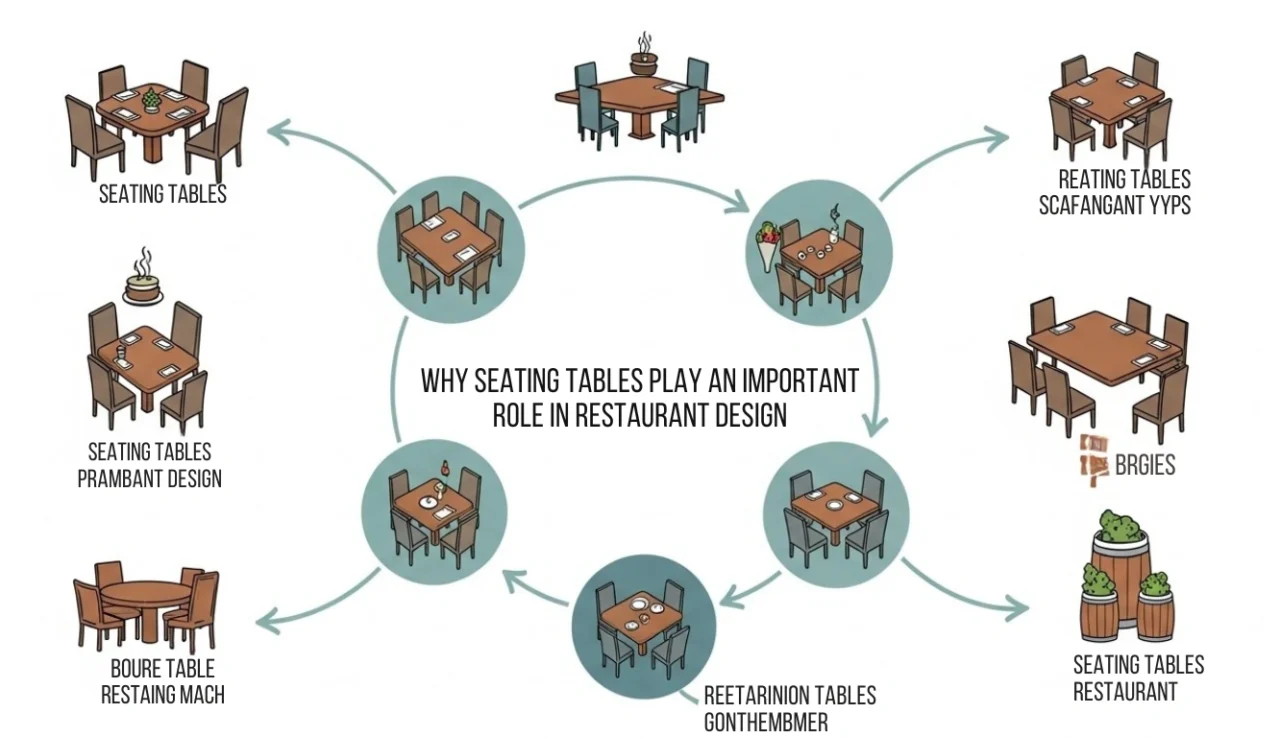
Have you ever walked into a restaurant and immediately felt comfortable? That feeling does not happen by accident. Thoughtful seating table design creates that welcoming atmosphere.
After hiring your chef, your seating arrangement becomes the most important decision you make. It determines how long customers stay, how much they spend and whether they come back again.
Studies show that well-designed seating layouts increase table turnover by 20 to 30 percent while boosting customer satisfaction. This guide explains why seating tables matter so much in restaurant design.
The Role of Seating Tables in Shaping Customer Psychology
When customers enter your restaurant, their brains process information instantly. The layout, spacing and shape of your tables send signals about what experience awaits them.
A tight arrangement of small tables says quick bite and energetic atmosphere. Wide-spaced tables with plush booths tell customers to take their time and enjoy a special occasion.
Color psychology also affects diners. Warm tones like reds and oranges stimulate appetite while cooler blues and greens calm people down but can suppress hunger.
Seating comfort directly influences spending habits. Customers sitting in comfortable booths stay longer and order more items. Uncomfortable chairs push people to finish quickly and leave.
The Importance of Seating Tables in Space Optimization
Restaurant real estate costs a lot of money. Every square foot adds to your rent, utilities and maintenance expenses. But packing in maximum tables does not always bring maximum profit.
Industry standards suggest these space allocations per person:
- Fine dining needs 20 to 22 square feet
- Standard dining needs 18 to 20 square feet
- Fast casual needs 16 to 18 square feet
Cramming more tables into your space does not automatically increase revenue. When customers feel cramped, they eat faster and leave sooner. They skip extra drinks and desserts because they want to escape the tight space.
Current standards place tables about 12 inches apart. However, research shows customers prefer greater distances between tables. You need to find middle ground between business needs and customer comfort.
Why Seating Tables Matter in Table Height, Thickness and Leg Clearance
Comfort at the table goes beyond just seating. Designers focus heavily on the relationship between table height, thickness and leg clearance. These three elements work together to create pleasant dining experiences.
Standard table height measurements include:
- Dining table height runs 28 to 30 inches from floor to surface
- Chair seat height runs 17 to 19 inches
- Bar table height runs 40 to 42 inches
- Bar stool height runs 28 to 30 inches
Table thickness plays a bigger role than most people realize. A tabletop measuring 1 to 1.5 inches thick provides enough support while keeping knee clearance intact. Thicker decorative tables running 2 to 3 inches can eat into valuable leg room and make guests uncomfortable.
Critical clearance measurements include:
- Knee clearance from seat to table underside needs 10 to 12 inches minimum
- ADA knee clearance requires 27 inches high by 30 inches wide
- ADA toe clearance needs 17 inches minimum under the table
- Tabletop overhang beyond base works best at 6 to 8 inches
Table accents design affects clearance just as much as top thickness. Pedestal bases give maximum leg movement freedom. Four-legged tables provide stability but can restrict seating flexibility at smaller tops.
The Role of Seating Tables in Strategic Furniture Selection
Different tables serve different purposes. Smart restaurant owners use a mix of seating options to handle various party sizes and customer preferences.
Booths remain the most requested option in American restaurants. They offer privacy, comfort and that cozy feeling customers love. Studies show booth customers spend more money per minute than those at regular tables.
Standard tables with chairs give you flexibility that booths cannot match. You can push them together for large groups or separate them for couples. They cost less than built-in booths but offer less privacy to your guests.
High-top tables create energetic and social vibes in your space. People stay shorter periods at high-tops, which benefits restaurants wanting quick turnover. Keep in mind that high-tops do not work well for elderly customers or those with mobility issues.
Communal tables encourage social interaction between strangers. They work great in breweries, farm-to-table restaurants and trendy urban spots where people expect a lively atmosphere.
Bar seating attracts customers who want shorter waits and quicker service. Many diners now choose to eat full meals at the bar instead of waiting for a table.
Spacing recommendations for bar seating include:
- Allow 24 to 26 inches between stool centers for drinks and snacks
- Allow 26 to 30 inches between stool centers for full meals
- Keep back aisle behind stools at 42 inches minimum
The Importance of Seating Tables in Revenue Generation
Your seating choices directly hit your bottom line. Understanding financial metrics helps you make smarter design decisions that increase profit.
The average revenue per seat in the restaurant industry sits around 27 dollars. This number changes based on your concept, cuisine, location and pricing strategy.
You can calculate Revenue Per Available Seat Hour using this formula:
RevPASH equals Total Revenue divided by Total Seats multiplied by Hours Open
Here is an example calculation:
- You have 40 seats and stay open 8 hours
- Your daily revenue hits 1200 dollars
- Your RevPASH equals 1200 divided by 320, which gives you 3.75 dollars per seat per hour
Target table turnover rates change by restaurant type:
- Fine dining aims for 1 to 2 turns per shift
- Full service restaurants aim for 2 to 3 turns per shift
- Fast casual spots aim for 3 to 4 turns per shift
Your seating design either helps you hit these targets or holds you back from reaching them.
| Restaurant Type | Space Per Person | Table Turns | Table Height | Seating Mix |
|---|---|---|---|---|
| Fine Dining | 20 to 22 sq ft | 1 to 2 | 30 inches | 50 percent booths, 40 percent tables, 10 percent bar |
| Casual Dining | 18 to 20 sq ft | 2 to 3 | 29 to 30 inches | 40 percent booths, 40 percent tables, 20 percent bar |
| Fast Casual | 16 to 18 sq ft | 3 to 4 | 29 inches | 20 percent booths, 50 percent tables, 30 percent counter |
| Cafe and Bistro | 15 to 18 sq ft | 4 to 5 | 28 to 30 inches | 30 percent booths, 50 percent tables, 20 percent outdoor |
| Bar and Pub | 15 to 17 sq ft | 4 plus | 42 inches | 10 percent booths, 30 percent tables, 60 percent bar |
Why Seating Tables Play a Crucial Role in ADA Compliance
Accessibility is not optional. The law requires it. Your seating layout must accommodate guests with disabilities or you face serious legal consequences.
Minimum ADA requirements include:
- Pathway width throughout dining room needs 36 inches minimum
- Knee clearance under accessible tables needs 27 inches high by 30 inches wide
- Toe clearance needs 17 inches minimum
- Restaurants with 20 or more tables must make 5 percent of seating accessible
- Restaurants with fewer than 20 tables need at least one accessible table
Position accessible tables where wheelchair users can navigate easily without asking for help. Include your patio seating when you calculate accessibility requirements.
Designing for accessibility helps everyone who visits your restaurant. Parents with strollers, elderly guests and people carrying heavy bags all benefit from wider pathways and thoughtful table placement.
The Role of Seating Tables in Service Flow and Functionality
Your seating arrangement affects how well your staff can do their jobs. Poor layouts create bottlenecks, slow down food delivery and frustrate servers trying to navigate tight spaces.
Essential clearance measurements for good service include:
- Back aisle behind bar stools needs 42 inches minimum
- Server pathways need 36 inches minimum
- Kitchen to table routes should run direct and stay unobstructed
Think about different traffic flows in your space. Guests heading to restrooms should not have to cross server paths. Food runners need clear lanes between the kitchen and dining tables. Hosts must guide newcomers to their seats without creating jams at the entrance.
Do not forget about storage needs. American diners carry purses, shopping bags and strollers with them. Add hooks under tables and set up storage areas near the entrance to prevent aisle blockages.
The Importance of Seating Tables in Creating Atmosphere
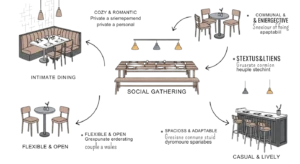
Your seating creates emotional responses that customers might not consciously recognize. Every element you choose contributes to your overall atmosphere.
Table shapes create different effects:
- Round tables encourage conversation and make everyone feel equal
- Square and rectangular tables feel more formal and suit business dinners
- Mixed shapes let you accommodate different party types and occasions
Table materials create different psychological impacts:
- Solid wood creates warmth and feels authentic
- Reclaimed wood triggers nostalgia and appeals to environmentally conscious diners
- Metal and glass look modern and sophisticated
- Combined materials add visual interest and give varied textures to touch
Lighting around your seating areas can enhance or ruin everything else you have done. Soft warm lighting makes intimate tables feel romantic. Brighter lights energize social spaces and keep energy levels high.
Why Seating Tables Matter in Avoiding Common Design Mistakes
Even experienced owners make costly seating errors that hurt their business. Watch out for these common problems.
Designing only for maximum capacity hurts more than it helps. Rooms packed to maximum density often underperform because service slows down and customers feel uncomfortable.
Ignoring table base footprints causes problems you do not expect. If base legs steal toe space, customers notice immediately. Always set up mock arrangements before you buy furniture.
Overlooking height and clearance relationships leads to complaints. Beautiful thick tabletops that reduce knee clearance frustrate guests and drive them away.
Mismatching party sizes wastes money every day. If 40 percent of your customers come as couples but 80 percent of your tables seat four people, those empty seats represent lost revenue.
Creating bad tables drives customers away. Every seat in your restaurant should feel like a good seat. Nobody wants to sit next to the restroom door or directly under a cold air vent.
The Role of Seating Tables in Flexible and Seasonal Design
Successful restaurant layouts change with customer needs. What works in January might not work in July. A setup perfect for Tuesday lunch might fail during Friday dinner rush.
Build flexibility into your design from the start:
- Pick tables that you can move, combine or separate easily
- Keep backup seating ready for unexpected large parties
- Create zones that expand or shrink based on how busy you get
Many restaurants adjust spacing throughout the day. Tighter spacing during lunch keeps turnover fast. Removing a few tables for dinner creates breathing room and encourages customers to stay longer and spend more.
Outdoor seating needs separate planning from your indoor space. Patios attract customers but bring weather challenges, noise regulations and different furniture requirements.
FAQs
What spacing works best between restaurant tables?
Keep minimum 18 inches between occupied chairs. Experts recommend 24 inches or more for fine dining and romantic atmospheres where customers want privacy.
What table height works best for restaurants?
Standard dining height runs 28 to 30 inches. Bar height runs 40 to 42 inches. These measurements pair with standard chair and stool heights to create comfortable seating positions.
How does table thickness affect customer comfort?
Thicker tabletops running 2 inches or more reduce knee clearance underneath. Aim for 1 to 1.5 inches to balance good looks with comfort.
What table shape works best for a restaurant?
No single answer fits every restaurant. Round tables encourage conversation. Square tables maximize space. Most restaurants do best with a mix of different shapes.
How do seating tables affect restaurant revenue?
Seating impacts your total capacity, how long customers stay, comfort levels that drive spending and how efficiently your staff can serve. Good seating design increases revenue per available seat hour.
What knee clearance does ADA compliance require?
Wheelchair accessible tables need 27 inches high by 30 inches wide knee clearance. At least 5 percent of your seating must meet these requirements.
Final Thoughts
Your restaurant seating tables work as strategic business tools that shape customer experiences and directly affect your profits. Every choice you make about table shape, spacing, height and thickness changes how guests feel and behave in your space. Restaurants that succeed treat seating design as an ongoing process and keep adjusting based on real feedback from customers and staff. Great food brings people through your door, but thoughtful seating brings them back again and again.